Retired since 2012.
2397 stories
·
4 followers

Ixnay on the Post-Apocalyptic Cannibals: Rebecca Solnit’s A Paradise Built in Hell

1 Comment
Books Seeds of Story

Ixnay on the Post-Apocalyptic Cannibals: Rebecca Solnit’s A Paradise Built in Hell

Recognizing that disasters and tragedies tend to bring out the best in people is the first step toward real progress.

By

Published on May 5, 2026

cover of A Paradise Built in Hell by Rebecca Solnit

Welcome to Seeds of Story, where I explore the non-fiction that inspires—or should inspire—speculative fiction. Every couple weeks, we’ll dive into a book, article, or other source of ideas that are sparking current stories, or that have untapped potential to do so. Each article will include an overview of the source(s), a review of its readability and plausibility, and highlights of the best two or three “seeds” found there.

This week, I cover Rebecca Solnit’s A Paradise Built in Hell: The Extraordinary Communities That Arise in Disaster, a book that every author should be required to read before writing about apocalypses, disasters, and crises of all types. Possibly also every journalist. Or maybe just everyone.

What It’s About

We all know this script: the seas have risen, the meteors have struck, and society has collapsed. A small band of survivors, probably led by one hard-headed cold-equations man following “lifeboat rules,” fights off looters and leeches and cannibals. Most of the world has descended into panic and riot. It’s a war of all against all, and life has become nasty, brutish, and short.

This is not, it turns out, how disaster works in real life. Solnit brings together anthropological research and her own reporting to show that actually, most people become more prosocial following disasters. They pull together. They help each other. They share resources. And they create temporary communities that find joy and solidarity in the face of destruction.

There are exceptions, and those exceptions mostly come from those who dominated the social structures disrupted by crisis. Too often, authorities fear the “threat” from ad hoc disaster response communities, and are more eager to control survivors than to help them survive. And media looking for dramatic stories are eager to perpetuate the narrative of trauma-driven savagery. These pressures, along with the exhaustion from chronic stress that can supplant initial momentum, too often break down these “paradises” of mutual aid and social connection. When they don’t, Solnit suggests, remarkable things can result.

Her first example comes from the 1906 San Francisco earthquake, where community members came together to feed, heal, and shelter each other in a situation where half the population had become unhoused. Many reported later on the sense of solidarity and fellowship, and the freedom found when human connection mattered so much more than possessions. Meanwhile the National Guard came in with orders to kill “looters,” which they followed with enthusiasm. Convinced that they were forestalling mob riots (of which there was no sign), they “protected the city from the people” and murdered those trying to requisition medical supplies, gather groceries with full permission from grocers, or dig survivors out from the rubble. They actively interfered with firefighting attempts, causing even more destruction than the original quake.

These descriptions echo those from Hurricane Katrina, which Solnit added to the book at the last minute. I remember a particularly pointed comparison of press coverage describing people of different races “looting” versus “gathering” supplies from flooded stores. Likewise, the occupying military—and heroic everyday responses—are extremely familiar to anyone following the present-day news from Minneapolis.

Solnit shows similar patterns after the Halifax Explosion of 1917, the Mexico City Earthquake of 1985, and 9/11. But there are differences as well. The worst of the disasters, the Mexican earthquake killed over 10,000 people and left 800,000 homeless. It highlighted the effects of government corruption and shoddy construction, and provoked lasting changes—sparked by those who came together during the disaster. Labor unions and housing rights collectives organized to improve conditions that had put so many at risk. The government tried to use the destruction as a pretext for relocating poor communities; communities pushed back. The solidarity formed in disaster lasted, and while Mexico continued (and continues) to have extensive problems, people held onto what they learned and used it to make real progress.

Disasters bring together people on the ground—those in the best position to help each other and share resources. They also threaten elite leaders, who often fear more for their extensive property than for human lives. Disasters also draw attention to leadership failures. Credit for successes is also an option (recall the Roman response to Pompei from Four Lost Cities), but only if leaders focus more on providing real help than on panicked defense of their own power. As disasters become more common, the rest of us need to pay attention to our own communal power, and build past the initial moments of mutual aid.

Buy the Book

cover of A Paradise Built in Hell by Rebecca Solnit

A Paradise Built in Hell: The Extraordinary Communities That Arise in Disaster

Rebecca Solnit

It’s 2001, and I’m driving into grad school on the morning of September 11th. By the time I get there the second plane has hit the World Trade Center, and this is clearly no accident. We’re on Long Island and everyone knows somebody near Ground Zero. I comfort my professors, and join the other students pulling together to figure out what we can do. Everyone is being kind and finding ways to help—as long as you don’t look Muslim.

It’s 2022 and I’m finally watching the Parable of the Sower opera at the Kennedy Center. It’s based on one of my favorite books by one of my favorite authors, but I’m struck by how very obviously it predates Solnit’s book. Even Octavia Butler—visionary, clear-eyed, and imagining paths through fascism and climate change—wrote a crisis that looks like a white-flight fantasy about the horrors of walking through Central Park. Why should cooperation take a messiah?

It’s 2026, and I’m thinking about the self-contradictory nature of crisis response. The initial solidarity and selflessness after 9/11 ultimately faded into bigotry and surveillance and war. The initial solidarity and selflessness of the COVID-19 pandemic ultimately faded into bigotry and fascism and war. But Solnit’s right about long-term effects. We’ve held onto some of the mutual aid institutions founded in 2020, and are moving away from the valorization of overwork despite employers’ best efforts. Authorities will always try to leverage fear and stress—how can we preserve and expand our first, most social responses to those things? How can we resist being redirected toward exclusion? The exhaustion of chronic crisis too often undermines our better natures.

And yet, and yet. Even with those worries and limitations, Solnit tells us something that we often see in person, and rarely see elsewhere. Stories and media tell us, too often, that crisis brings out our worst natures. That you’d better bar your door against looters and violent gangs. And these fears make us easier to control. If you don’t go outside, you never see what people are building. If you do go outside, you need to know that what you’re seeing isn’t a wild exception to the barbaric rule.

I have a long list of stories that do it wrong. Disaster movies and thrillers would prefer the drama of fighting off cannibal gangs (Where do they all come from???) than the drama of figuring out how to feed your block on a portable grill—or of fighting off police to get at needed medical supplies. People in shelters holding off invaders, fighting each other, held together only by alpha “captains.” Charismatic madmen getting from Point A to human sacrifice in a matter of days. It’s just not how most people actually work, and it’s time we realized that and move on to the business of figuring out how to do better after the first few weeks have passed.

Why is it so easy to believe that our neighbors (or the people on the other side of town) are held back from mob violence only by a fragile veneer of normality? The story shows up again and again, most often told by those who benefit from telling it. Anxious authorities want to be the only organizing force, and to protect property more than people. Media news falls into the trap of seeking excitement and engagement over truth, and has done so since long before social media algorithms exacerbated that tendency. And even in the age of climate change, we encounter more disasters on screen and page than in real life—if we’re not careful, we believe their tropes over our own lying eyes. A Paradise Built in Hell is a much-needed counternarrative, and once you’ve read it you’ll never see disasters, or humanity, quite the same way again.

The Best Seeds for Speculative Stories

The Real Villains. Admitting that a good disaster tale needs human conflict, it’s time to replace post-apocalyptic biker cannibals with post-apocalyptic police militias. (They can still be cannibals, I guess, if you really want.) In San Francisco in 1906, the National Guard exacerbated fires with explosives and killed people working in the rubble. Almost a century later, police shot Black men in flooded New Orleans, ostensibly to prevent “looting.” After the 1985 earthquake, the Mexican government tried to bulldoze collapsed buildings from which people were still pulling children; students lay down in front of the construction equipment to block them with visible bodies. Time and again, power fears solidarity, and protects itself lest “order” collapse. We need more cinematic versions of these very real threats—stories that show everyday people simultaneously dealing with disaster recovery and occupation from above.

Learning from Paradise. Stories about hopeful futures sometimes stumble over “how we got there.” Solnit shows how valuable it can be to leverage the solidarity of immediate disaster—and how much work is required to keep that momentum going. It’s doable, but it’s not easy. How does a sheet metal soup kitchen turn into feeding each other long-term? Once we’ve combined resources to pull people from flood waters, what more can we do? How do we can hold onto our crisis-born sense of connection? I’d love to see more solarpunk and hopepunk and cli-fi about building movements from the rubble.

New Growth: What Else to Read

Rutger Bregman’s Human Kind: A Hopeful History also talks about situations that have brought out the best in people, and argues with cynical narratives about human nature. If you want to look at the how-to of building long-term from disaster solidarity, Kelly Hayes and Mariame Kaba’s Let This Radicalize You: Organizing and the Revolution of Reciprocal Care talks about the mutual aid work that’s growing from COVID responses.

We Will Rise Again, an anthology edited by Karen Lord, Annalee Newitz, and Malka Older, is full of stories about speculative protest and solidarity movements. I’ve mentioned it here before, but Izzy Wasserstein’s “The Rise and Fall of Storm Bluff, Kansas” feels particularly relevant, not so much because of disaster as because of a clear-eyed sense of elite panic.

I really like the communal responses to a catastrophic meteor impact that start off Mary Robinette Kowall’s The Calculating Stars. In a very different sort of story, I also love the communal versus authoritarian communities in Mad Max: Fury Road, which has all the scary-awesome biker gangs anyone’s heart could desire. Micaiah Johnson’s The Space Between Worlds and follow-up Those Beyond the Wall riff on Mad Max tropes, and imagine very different communities that can grow in the wake of disaster.

One of my favorite musicals is Come From Away, based on an oral history of how Gander, Newfoundland took in stranded plane travelers in the wake of 9/11. Jim DeFede’s The Day the World Came to Town: 9/11 in Gander, Newfoundland offers the full non-fiction version of the same story.

Please feel free to share your thoughts on the book, your own recommendations for further reading, or your favorite non-cannibalistic disaster responses in the comments![end-mark]

The post Ixnay on the Post-Apocalyptic Cannibals: Rebecca Solnit’s <i>A Paradise Built in Hell</i> appeared first on Reactor.


Read the whole story
cjheinz
5 hours ago
reply
"Recognizing that disasters and tragedies tend to bring out the best in people is the first step toward real progress."
Lexington, KY; Naples, FL
Share this story
Delete

'Extreme Heat and Agriculture' report released on Earth Day got less attention than the dumbest Truth™ Social post last week

1 Comment
'Extreme Heat and Agriculture' report released on Earth Day got less attention than the dumbest Truth™ Social post last week


Temperature is the dominant abiotic factor determining the distribution of biological diversity on the planet. Extreme temperatures have a profound impact on the performance of all species, including homo sapiens, and ultimately determine where species can continue to thrive (Arnold et al., 2025).—From "Extreme Heat and Agriculture"

Each time the Intergovernmental Panel on Climate Change has issued one of its six assessments of our climate situation over the past 36 years, threats from global warming to the food supply aren't one of the risks that has gotten as much play as they should in headlines or in media reports generally. This isn't because the assessments avoided the subject. On the contrary. From the get-go in 1990, the IPCC authors pointed out that most of the food crops that the bulk of the planet's human population depends on to stay alive would be at risk if our prodigious burning of hydrocarbons continued unabated.

But, for the most part, the discussion early on was full of ifs and whens. Yes, if we stay on the current climate trajectory, then things could get bad, was the widely held perspective. But the when of that happening was viewed as quite far in the future, and would only affect people not yet born. We had time.

The fourth assessment in 2007 marked a turning point. It concluded with stronger data that warming was already affecting some crop systems. An often-cited finding from that report: even modest warming in low latitudes could reduce yields. In 2013-14, the fifth assessment firmed up the assertions of its predecessor with data showing the negative climate impacts on wheat and maize — corn — would be more common than positive ones. There would be serious risks to fisheries and livestock. Undernutrition risks would increase.

The sixth assessment in 2021-23 was the bluntest yet. It noted that climate change had already reduced food and water security for millions of people and had harmed agricultural productivity in many regions. The impact of heat compounded by drought had, it said, led to fisheries declines, crop failures, supply chain disruptions, and labor productivity losses from extreme heat. The assessment pointed out that climate change was doing disproportionate harm in places that had contributed the least to global warming — Africa, Asia, and Latin America in general, as well as Indigenous and low-income populations specifically.

There is a familiar ritual in global governance: catastrophe arrives in increments, institutions issue careful reports, markets shrug, politicians promise frameworks but shelve those reports, and the vulnerable pay. On Earth Day last week, the new World Meteorological Organization and the U.N. Food & Agriculture Organization, jointly released a new report — Extreme Heat and Agriculture that tries to interrupt that ritual by stating what should by now be obvious: The world’s food system is being destabilized by heat. Not someday. Now.

Said FAO Director-General QU Dongyu,“This work highlights how extreme heat is a major risk multiplier, exerting mounting pressure on crops, livestock, fisheries and forests, and on the communities and economies that depend upon them.”

WMO Secretary-General Celeste Saulo said, “Extreme heat is increasingly defining the conditions under which agrifood systems operate. More than simply an isolated climatic hazard, it acts as a compounding risk factor that magnifies existing weaknesses across agricultural systems. Early warnings and climate services like seasonal outlooks are vital to help us adapt to the new reality,”

KEY FINDINGS FROM THE REPORT

Extreme heat events are becoming more frequent, intense, and prolonged, with major implications for food production systems worldwide.
Crop yields decline sharply once heat thresholds are crossed — for many staple crops, around 30°C (86°F) during sensitive growth stages.
Livestock productivity and survival are threatened as heat stress reduces milk yields, fertility, feed intake, and increases mortality.
Marine heatwaves are disrupting fisheries and aquaculture, with more than 90% of the global ocean experiencing at least one heatwave in 2025.
Agricultural workers face escalating health and income risks, especially in tropical and subtropical regions where outdoor labor may become unsafe for much of the year.
Heat acts as a “risk multiplier,” as Dongyu says, worsening drought, wildfire, water scarcity, pest outbreaks, disease spread, and food-price volatility.

Reality is a wheat farmer watching grain heads shrink before harvest. A dairy producer losing output during a heat dome. A fisher hauling emptier nets from overheated waters. A laborer deciding whether to keep working in dangerous temperatures because missing a shift means missing dinner. A dad losing his shit in the produce section when he sees how much grocery prices keep rising.

As noted, many staple crop species begin seeing yield declines above roughly 30°C, with some, of course, more sensitive than others. Heat can interrupt pollination, accelerate maturation before grain development, increase water demand, and invite pests whose geographical ranges expand in warmer conditions. But for livestock, thermal stress commonly begins above 25°C (77°F), and at even lower temperatures for pigs and poultry, which cool themselves poorly. The consequences include reduced eating, slower growth, reduced fertility, reduced milk production, and death in severe episodes. One analysis found milk yields fell half a percent for every hour cows were exposed to high heat stress, with effects lingering for days.

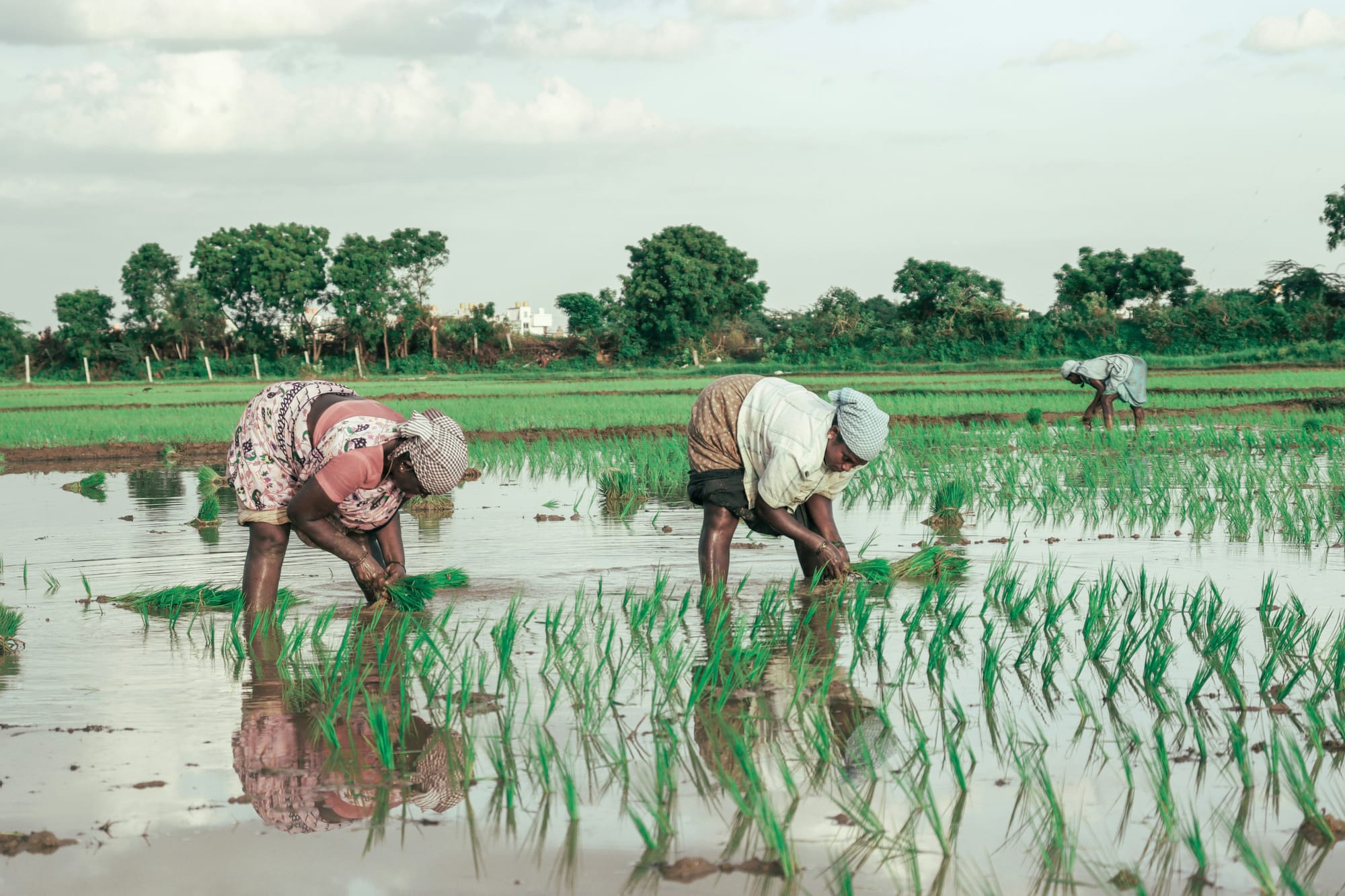
Here's what the report has to say about rice growing amid climate-driven heatwaves in India:

Indian agriculture continues to be vulnerable to weather extremes despite being self-sufficient in grain production. Heat waves cause physiological damage to crops, animals, poultry and fish; reduces water availability; increases demand of water and energy and reduces work efficiency. According to the report Heat Wave 2022: Causes, impacts and way forward for Indian Agriculture [...] March and April 2022 were the warmest months on record in India (Bal et al., 2022). During this period, extreme temperatures were 8 to 10.8°C [14.4°-19.4°F] higher than normal and rainfall was 60 to 99 percent below normal in 10 out of 36 meteorological subdivisions. That year will also be remembered as a classic example of the combined impacts of high temperatures and reduced rainfall felt throughout India's agricultural production systems, specifically in northern and central India. The abonormal increase in maximum and minimum temperatures during 2022 affect crops, fruits, vegetables and lieestock and poultry in over one-third of India's states, including Punjab, Harhana, Rajastahan, Jammu and Kashmir, Himachal Pradesh, Utter Pradesh, Madhyah Pradesh, Bihard and Maharsashtra.
Wheat yields were reduced by 9 to 34 percent. For maize [corn] stunted growth and a fall armyworm attack led to yield reduction of up to 18 percent.

Yield reductions also occurred in chickpeas and multiple fruit crops, with losses of some vegetables as high as 50 percent. Dairy cattle produced less milk, chickens laid fewer eggs and were more likely to die. These effects subsided but lasted longer than the heatwave itself.

Labor, a topic often erased from food discussions, gets some focus in the report, too. Agricultural workers are among the most exposed people on Earth: long hours outdoors, limited protections, and little bargaining power. In some already hot regions, the report asserts that days unsafe for outdoor work may climb to 250 annually before the end of this century. Think about the cruelty embedded in that statistic. The people least responsible for emissions are asked to work inside the blast furnace those emissions built.

That's not the only impact on people. From the report:

In a 2024 report, The Unjust Climate, FAO has assessed the socioeconomic aspects related to extreme weather events in agriculture (FAO, 2024a). The report found that in an average year, poor households lose 5 percent of their total income due to heat stress relative to better-off households. The impacts are even greater for female-headed households who experience annual average income losses of 8 percent due to heat stress relative to male-headed households. Globally, the average annual exposure to heat stress reduces the total incomes of rural female-headed households in low- and middle-income countries by a combined USD 53 billion relative to male-headed households. Over the long-term, a 1°C rise in temperature results in a 54 percent increase in the reliance of poor households on agriculture for income relative to non-poor households. This greater reliance on agriculture increases their exposure to future climate change shocks.

The report includes a lengthy case study of Brazil, where climate stress is colliding with one of the world’s agricultural powerhouses. Brazil is no marginal producer. It exports vast quantities of soybeans, corn, beef, sugar, coffee, and orange juice. When Brazil suffers heat shocks, global markets feel it.

Recent extreme heat episodes, often amplified by drought and shifting rainfall patterns, have damaged Brazilian crop yields and strained livestock production. In key producing regions, excessive heat during flowering and grain-storing periods reduced productivity for soy and corn, while pasture quality declined for cattle. Coffee, especially the arabica varieties grown in southeastern highlands, faces increasing vulnerability because quality and yield depend on relatively stable temperature bands. Push those bands upward, and growers must move upslope, invest heavily, or absorb losses.

Brazil’s case also exposes the political economy of climate risk. The same country that feeds hundreds of millions abroad has millions at home facing food insecurity and volatile prices. When harvests tighten or transport systems are disrupted by drought and heat, domestic consumers can be priced out while exports continue. Field workers harvesting cane, tending cattle, or working logistics networks endure dangerous outdoor temperatures with uneven protections. Heat lowers productivity, increases illness, and raises costs, something that is often unfairly blamed on labor.

Brazil is a warning in plain view. If even a continental-scale farm superpower can be destabilized by heat that is rising in an accelerated fashion, no food system is truly secure.

Secretary-General Saulo is exactly right that extreme heat is increasingly defining the conditions under which agrifood systems operate.” Heat magnifies debt. Heat magnifies water scarcity. Heat magnifies the defects of weak labor law enforcement. Heat magnifies dangers of depending on export monocultures. Heat magnifies hunger.

The authors recommend more climate services, early warning systems, altered planting calendars, resilient breeds, financing tools, insurance, and social protection. Serious and worthwhile measures, to be sure. But there's danger in presenting adaptation as if it were primarily a management challenge rather than a matter deeply entangled with who has political clout.

Who controls the land?
Who controls the seeds?
Who controls the water rights?
Who protects workers?
Who profits from commodity volatility?
Who funds disinformation while emissions rise?

Without candid public answers to those questions and scrutiny of their impacts, crafting new policy is as useful as putting a picket fence around a wildfire.

FAO official Kaveh Zahedi told Reuters that “Extreme heat is rewriting the script on what farmers, fishers, and foresters can grow and when they can grow. In some cases it is even dictating if they can still work.” That sentence should be read in every agriculture ministry on Earth. Because what's being rewritten is far more than the farming calendar. It's the social contract.

As yields fall while input costs rise, farms consolidate, something we've already seen too much of the past half century. As climate makes laboring more perilous, migration increases. As fisheries fail, coastal economies unravel. As prices spike, authoritarian politics feed on grievance and scarcity. Bread has always been political.

SO WHAT SHOULD BE DONE?

Cut emissions fast. No adaptation strategy can keep pace with unchecked warming. Protect workers. Mandatory heat standards, paid breaks, hydration, cooling shelters, and enforcement. Build public resilience. Storage, irrigation efficiency, grids, extension services, and local processing. Democratize seed banks and research. Climate-resilient genetics should not be monopolized. Finance justice. Debt relief and grants for climate-hit nations. Diversify agriculture. Monocultures are profitable in spreadsheets and brittle in heatwaves.

All of that takes money. As the report states, however:

Agriculture adaptation is currently not strongly supported by the financial sector. Agrifood systems received only 4 percent of total climate-related development finance in 2023 (FAO) 2025c). The context framed by these conditions highlights the fact that while technical solutions may exist, their deployment depends on ensuring the presence of supportive socioeconomic policies, financial investment, organizational capacitys and overcoming knowledge deficits and other barriers. In response, fully integrating climate change adaptation planning into traditional planning frameworks will be required to move from tactical to transformative response formulation. This integration will be key to ensuring lasting impacts and a shift away from short-term solutions that are prone to setbacks due to a lack of coherency and sustainability.

For all its descriptive and prescriptive detail, this report should also be read as an indictment. Decades of warnings were met with delay, denial, and profit-taking. For a while now the invoice has been arriving in the form of burned fields, stressed animals, over-drained water resources, dangerous workplaces, and higher food bills.

One of the key projects of addressing the climate crisis is electrification. And on that score, the world is moving at a faster pace than many of the most optimistic analysts ever expected. Still not fast enough, but making steady progress. In agriculture, not so much. The past and present foot-dragging means the impacts on the food supply chain will certainly get worse, perhaps much worse. There is a lot of whistling in the dark about this.

Read the whole story
cjheinz
7 days ago
reply
We are so fucked ...
Lexington, KY; Naples, FL
Share this story
Delete

Whale Eye

1 Comment

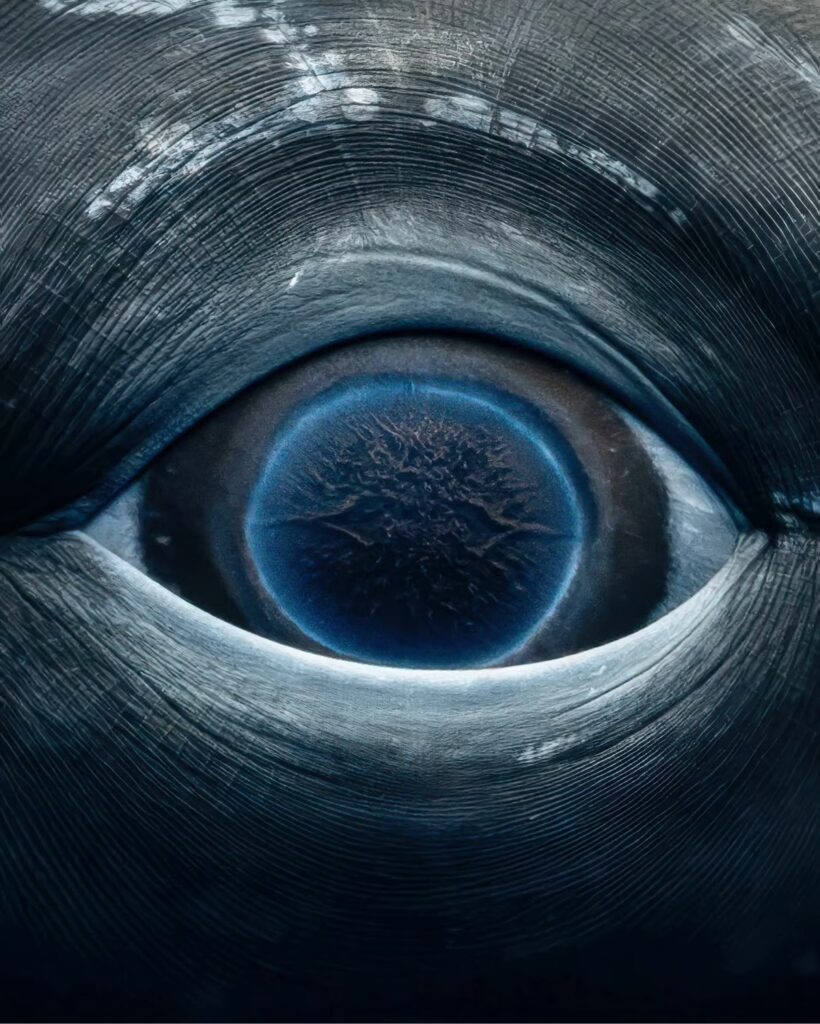
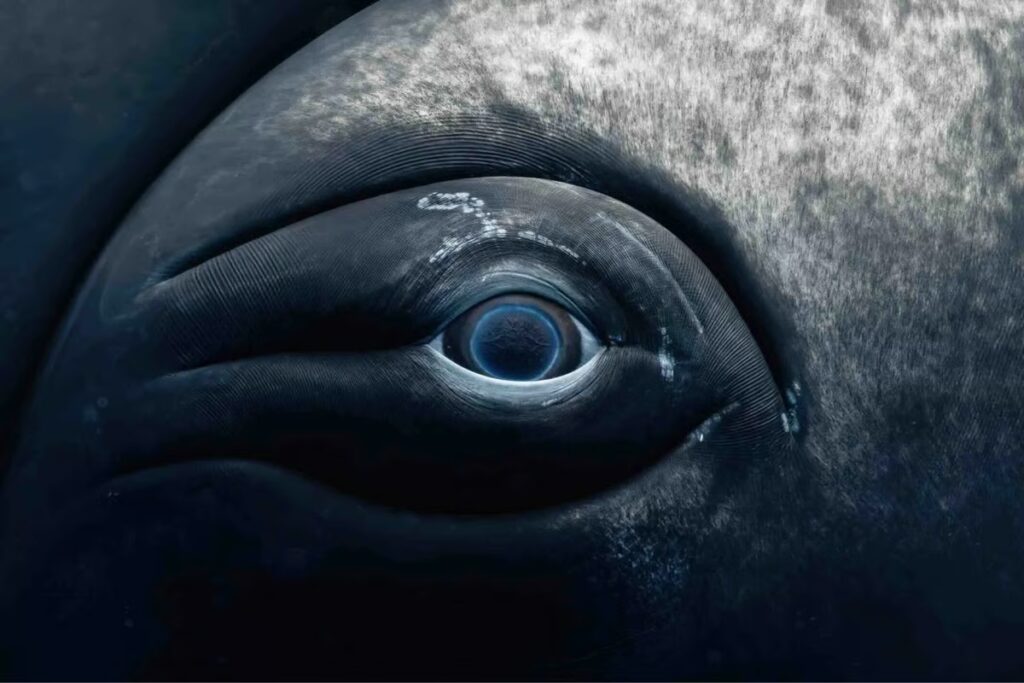
In October 2024, Rachel Moore had a close encounter with a humpback whale in French Polynesia and took these photos of the whale’s eye. Whoa!

(Via Kottke)

Read the whole story
cjheinz
10 days ago
reply
Whoa, indeed!
Lexington, KY; Naples, FL
Share this story
Delete

“Even the Weather Felt Expensive”

1 Comment

Filmmaker Noah Hawley was invited to Amazon founder Jeff Bezos’s Campfire retreat in 2018. Reflecting on the experience recently for The Atlantic, Hawley writes that today’s super-rich have stopped “pretending that the rules of human society apply” to them.

The Jeff Bezos of 2018 acted as if he still believed that people’s impression of him mattered, that his financial and social value could be affected by negative publicity. He still believed that his actions had consequences. He had not yet freed himself—the way Daniel Plainview freed himself—from the rules of men.

Eight years later, Bezos and two of the world’s other richest men—Mark Zuckerberg and Elon Musk—have clearly left the world of consequences behind. They float in a sensory-deprivation tank the size of the planet, in which their actions are only ever judged by themselves.

The closer I’ve gotten to the world of wealth, the more I understand that being truly rich doesn’t mean amassing enough money to afford superyachts, private jets, or a million acres of land. It means that everything becomes effectively free. Any asset can be acquired but nothing can ever be lost, because for soon-to-be trillionaires, no level of loss could significantly change their global standing or personal power. For them, the word failure has ceased to mean anything.

Daisy Grewal in 2012 for Scientific American: How Wealth Reduces Compassion.

Who is more likely to lie, cheat, and steal—the poor person or the rich one? It’s temping to think that the wealthier you are, the more likely you are to act fairly. After all, if you already have enough for yourself, it’s easier to think about what others may need. But research suggests the opposite is true: as people climb the social ladder, their compassionate feelings towards other people decline.

Billionaire Wilderness: The Ultra-Wealthy and the Remaking of the American West by Justin Farrell sounds like an interesting read along these same lines.

Tags: Daisy Grewal · Jeff Bezos · Noah Hawley · wealth

Read the whole story
cjheinz
13 days ago
reply
Mme. La Guillotine, s’il vous plait.
Lexington, KY; Naples, FL
Share this story
Delete

Project Gutenberg

1 Share

Project Gutenberg is one of the oldest and most generous corners of the internet: a vast, free digital library built by volunteers. Founded in 1971, it offers more than 75,000 eBooks—mostly classic works whose copyrights have expired—available to read, download, and share without cost.

Read the whole story
cjheinz
13 days ago
reply
Lexington, KY; Naples, FL
Share this story
Delete

Subscription Cost Visualizer

1 Comment

Subscription Cost Visualizer is a lightweight, interactive tool that turns your subscriptions into a visual grid. Instead of a list of numbers, you get a clear, proportional view of where your money is going—larger blocks represent higher costs, making your spending instantly legible.

Read the whole story
cjheinz
13 days ago
reply
Good tool.
Lexington, KY; Naples, FL
Share this story
Delete
Next Page of Stories