Retired since 2012.
2408 stories
·
4 followers

What’s Your Favorite Recipe?

1 Comment

I am not what you would call a dedicated home cook. But every once in a while, I get a bee in my bonnet and make something from my small cache of recipes or from something I saw online that looked good. Some of my go-tos include:

Rigatoni With White Bolognese (PDF)
Orecchiette with Sausage and Broccoli
Pressure Cooker Mushroom Risotto
Caldo Verde (Portuguese Potato and Kale Soup With Sausage)
Smoked Haddock Chowder (April Bloomfield)
The World’s Best Pancakes
Smoky Corn Chowder

Some of these aren’t particularly easy to make, but the flavors created with the extra time are worth it.

What are some of your favorite recipes?

(I don’t have any good photos of any of the above recipes, so I included one of some avocado toast I made: mashed avocado with evoo, tomatoes + balsamic vinegar, fried egg (crispy w/ runny yolk), chili oil, toast, lots of salt on everything.)1

  1. Not sure where I learned this, but when making food, I salt everything separately. That way, each flavor gets accentuated on its own — even in soups or casseroles — instead of the whole thing just being vaguely salty. The main purpose of salt is not to make food salty, it’s to heighten the flavors already present.

Tags: cooking · food

Read the whole story
cjheinz
1 hour ago
reply
Recipes.
Lexington, KY; Naples, FL
Share this story
Delete

Pluralistic: Making sense of Trump's unscheduled sudden midair disassembly of the American empire (16 May 2026)

1 Comment


Today's links


A detail from Dore's engraving depicting the drowning of the Leviathan - a great sea-serpent thrashing in a chaotic dark sea. The image has been altered: it has been hand-tinted. The sea serpent is wearing a MAGA hat. Drowning nearby are a beleagured Uncle Sam, an Android robot, and the Statue of Liberty.

Making sense of Trump's unscheduled sudden midair disassembly of the American empire (permalink)

For generations, the American empire was the most powerful force on earth, and so we tended to assume that it was the most durable force on earth – surely anything so powerful must also be eternal?

But power and durability aren't the same thing, as Le Guin reminded us with her oft-quoted maxim that "We live in capitalism, its power seems inescapable — but then, so did the divine right of kings":

https://www.ursulakleguin.com/nbf-medal

Monarchs may be powerful, but that power is derived from a manifestly incorrect belief in special blood, a belief that requires monarchs to inbreed. At best, this produces heads of state who can't stop bleeding and also can't tell you if their blood is blue or red; at worst, it yields heads of state who can't speak intelligibly, much less produce another generation of royals:

https://en.wikipedia.org/wiki/Charles_II_of_Spain

Oligarchy also produces a sequence of progressively weirder and more terrible rulers who rely on a mix of lies, flattery, coercion and personal cult nonsense to hold their coalition together in the face of mounting evidence for the system's bankruptcy. Thus Reagan begat GW Bush, who begat Trump, whose potential successors are a kennel of the least-charismatic chud podcasters ever to curse an RSS feed.

Trump's second term has resulted in a rapid, unscheduled, mid-air disassembly of the American empire. As Baldur Bjarnason writes, under Trump, America "first turned on their trading partners, then their allies in Europe, and then they delivered one of this century’s biggest economic and energy crises to their allies in Asia":

https://www.baldurbjarnason.com/2026/the-old-world-of-tech-is-dying/

The line comes from an excellent post entitled "The old world of tech is dying and the new cannot be born," about the impact of Trump's de-Americanization of the world on the US tech industry, and thus the world's relationship to tech more broadly. As Bjarnason writes, Trump's tech giants dominate the world because America dominates the world. It's not because the world likes American tech. As Bjarnason writes:

They are, more often than not, about as popular and respected as tobacco or pharmaceutical companies – some of them and their products are polling in terms of public sentiment in ranges similar to child molesters or authoritarian immigration enforcement entities – and their CEOs are some of the more despised public figures in recent history.

These very, very unpopular tech companies dominate because American trade policy insists that they must. They are allowed to violate local laws because stopping them from doing so would result in trade sanctions. It's true that US tech companies face fines abroad from time to time, but these are "the price list for inflicting societal suffering. Pick the one that suits your business model." US trading partners haven't really attempted to extinguish the unlawful conduct of US tech companies.

All of that is up for grabs now, thanks to Trump's uncontrollable compulsion to repeatedly hormuz himself (and America) in the foot. But – as Bjarnason writes – this didn't start with Trump. As ever, Trump is as much an effect as a cause, and the most important cause of Trump is the conversion of America into a financial economy, which started under Reagan, but was only finalized by Obama, who let the Wall Street looters who destroyed the world economy walk away unscathed, even as they stole the homes of millions of Americans:

https://web.archive.org/web/20170130083243/https://www.theguardian.com/commentisfree/2017/jan/16/how-barack-obama-paved-way-donald-trump-racism

Financial economies "suck the air out of the rest of the economy and make it less competitive." Keeping billionaires in megayachts comes at the expense of "research, education, infrastructure, and healthcare." Countries that financialize lag behind countries where the economy is based on making things, not extracting or financing things.

Generations of both imperial looting and domestic investment made America the richest country on earth. That wealth cushioned America's transition to oligarchy: for a while, the country could both "finance and billionaire parasites sucking its blood" and continue to invest in itself. But while you can double the wealth of a billionaire at the expense of a town or two, doubling the wealth of a centibillionaire requires the destruction of whole regions.

As America looted itself into irrelevance, China – a very different kind of autocracy – invested in domestic capacity and domestic consumption. China's hardly a well-run place: like any autocracy, it functions according to the whims of extremely fallible officials, which produces real-estate bubbles and other crises of production (to say nothing of the demographic crisis of the One Child policy) and necessitates steadily increasing oppression, from online surveillance to concentration camps in Xinjiang.

Bjarnason writes about how this Chinese/US world presents a "double bind" for the EU. Siding with the US is increasingly untenable: the EU exists in large part to promote its domestic industries, but the US is no longer content to leave these alone. As Bjarnason says, US economic policy is now, "whatever our oligarchs want to steal this month, they get."

US tech has extended so many tendrils into so many sectors that it's not possible to defend any industrial sector without impinging on the "technopoly," where "the only ideas and thoughts that have social and cultural legitimacy are those that support, are supported by, and are mediated through technology."

This means that continuing to work within the American system means a steady transfer of economic and political control of every aspect of your life to the US, a decaying empire ruled over by a mad king. Nevertheless, there is a strong, vestigial reflex to protect American tech in the EU, which leaves European power-brokers scrambling to come up with reasons that the EU should confine its tech regulation to empty symbolic gestures, while avoiding meaningful action at all costs:

https://cerre.eu/wp-content/uploads/2026/02/CERRE_Horizontal-Interoperability-of-Social-Networking-Services.pdf

But the American tech sector relies on the other sources of American power – the ones that Trump is so bent on destroying. Trump's de-dollarization of the world economy is pushing the world away from using American tech for payment processing and networking. The American empire created the form of the US tech sector. As Bjarnason writes, "without the weight of the US political empire behind it – if Airbnb or Uber had been local startups – much fewer countries in the world would have loosened their regulations and consumer protections to accommodate them to the point where they prospered as they did."

Trump isn't the first US leader to make a strategic blunder (the US has lost every war it's fought since WWII, after all). But Trump's blunders are different in that they "deliberately signal the end [the US] empire." Hormuz and tariffs have driven people away from the US dollar, and everyone knows who to blame for the senseless deaths in the Gulf and the global privation caused by oil rationing.

That's bad news for a software industry that "shifted its entire value proposition from 'we make tools that help you make or save money' to using political clout and the dollar hegemony to capture, control, and loot entire sectors of the various economies of the world. That strategy only works when you’re in charge."

DOGE wiped out the health systems of the global south, and now Trump's trade negotiators are demanding that these countries promise to keep their hands off of US tech in exchange for reinstating a small trickle of the aid they lost. These countries are rejecting those demands:

https://www.reuters.com/business/healthcare-pharmaceuticals/zambia-says-us-health-deal-must-be-uncoupled-minerals-access-2026-05-04/

It's all up for grabs, in other words. The post-American internet is being born in a post-American world, and the shape of both is impossible to determine from this side of the veil. Bjarnason quotes Gramsci: "the old is dying and the new cannot be born."

I hold out high hopes for a world of international digital public goods: free and open software that replaces America's extractive, defective black boxes with transparent, auditable, trustworthy alternatives that are under the control of the people who use them:

https://pluralistic.net/2026/04/16/pascals-wager/#doomer-challenge

But – as Bjarnason says – even the intellectual property framework that the free/open source movement relies on to make its licenses enforceable is an artifact of the collapsing American empire. If the global copyright system collapses with America, there won't be any impediments to reverse-engineering and improving the tech around us – but there also won't be any way to enforce the free software licenses that keep that software open:

https://pluralistic.net/2026/04/02/limited-monopoly/#petardism

The whole essay is very good and – like so many great essays – it raises more questions than it answers. It's also full of standout one-liners like this one:

How do LLMs affect productivity and quality? (Much like leaded petrol. There’s some potential benefit for individual users with literally decades of expertise, provided nobody else uses LLMs. The results are catastrophic when everybody is using them.)

Consider moving it to the top of your weekend reading.


Hey look at this (permalink)


A shelf of leatherbound history books with a gilt-stamped series title, 'The World's Famous Events.'

Object permanence (permalink)

#25yrsago Is the law copyrighted?
https://web.archive.org/web/20010519134232/http://www.uniontrib.com/news/uniontrib/sun/news/news_1n13own.html

#15yrsago Canadian copyright collective wants a music tax on memory cards https://web.archive.org/web/20110517205114/https://www.michaelgeist.ca/content/view/5798/125/

#10yrsago FBI Director: viral videos make cops afraid to do their jobs https://www.nytimes.com/2016/05/12/us/comey-ferguson-effect-police-videos-fbi.html?_r=2

#10yrsago Banker implicated in one of history’s biggest frauds says boss beat him with a tiny baseball bat https://web.archive.org/web/20160516173952/http://www.ibtimes.co.uk/barclays-banker-accused-rigging-libor-rate-hit-assistant-baseball-bat-1559792

#10yrsago Infested: an itchy, fascinating natural history of the bed bug https://memex.craphound.com/2016/05/14/infested-an-itchy-fascinating-natural-history-of-the-bed-bug/

#5yrsago A weapon of mass financial destruction https://pluralistic.net/2021/05/14/billionaire-class-solidarity/#club-deals

#1yrago Are the means of computation even seizable? https://pluralistic.net/2025/05/14/pregnable/#checkm8


Upcoming appearances (permalink)

A photo of me onstage, giving a speech, pounding the podium.


A screenshot of me at my desk, doing a livecast.

Recent appearances (permalink)


A grid of my books with Will Stahle covers..

Latest books (permalink)


A cardboard book box with the Macmillan logo.

Upcoming books (permalink)

  • "The Reverse-Centaur's Guide to AI," a short book about being a better AI critic, Farrar, Straus and Giroux, June 2026 (https://us.macmillan.com/books/9780374621568/thereversecentaursguidetolifeafterai/)

  • "Enshittification, Why Everything Suddenly Got Worse and What to Do About It" (the graphic novel), Firstsecond, 2026

  • "The Post-American Internet," a geopolitical sequel of sorts to Enshittification, Farrar, Straus and Giroux, 2027

  • "Unauthorized Bread": a middle-grades graphic novel adapted from my novella about refugees, toasters and DRM, FirstSecond, April 20, 2027

  • "The Memex Method," Farrar, Straus, Giroux, 2027


Colophon (permalink)

Today's top sources:

Currently writing: "The Post-American Internet," a sequel to "Enshittification," about the better world the rest of us get to have now that Trump has torched America. Third draft completed. Submitted to editor.

  • "The Reverse Centaur's Guide to AI," a short book for Farrar, Straus and Giroux about being an effective AI critic. LEGAL REVIEW AND COPYEDIT COMPLETE.

  • "The Post-American Internet," a short book about internet policy in the age of Trumpism. PLANNING.

  • A Little Brother short story about DIY insulin PLANNING


This work – excluding any serialized fiction – is licensed under a Creative Commons Attribution 4.0 license. That means you can use it any way you like, including commercially, provided that you attribute it to me, Cory Doctorow, and include a link to pluralistic.net.

https://creativecommons.org/licenses/by/4.0/

Quotations and images are not included in this license; they are included either under a limitation or exception to copyright, or on the basis of a separate license. Please exercise caution.


How to get Pluralistic:

Blog (no ads, tracking, or data-collection):

Pluralistic.net

Newsletter (no ads, tracking, or data-collection):

https://pluralistic.net/plura-list

Mastodon (no ads, tracking, or data-collection):

https://mamot.fr/@pluralistic

Bluesky (no ads, possible tracking and data-collection):

https://bsky.app/profile/doctorow.pluralistic.net

Medium (no ads, paywalled):

https://doctorow.medium.com/

Tumblr (mass-scale, unrestricted, third-party surveillance and advertising):

https://mostlysignssomeportents.tumblr.com/tagged/pluralistic

"When life gives you SARS, you make sarsaparilla" -Joey "Accordion Guy" DeVilla

READ CAREFULLY: By reading this, you agree, on behalf of your employer, to release me from all obligations and waivers arising from any and all NON-NEGOTIATED agreements, licenses, terms-of-service, shrinkwrap, clickwrap, browsewrap, confidentiality, non-disclosure, non-compete and acceptable use policies ("BOGUS AGREEMENTS") that I have entered into with your employer, its partners, licensors, agents and assigns, in perpetuity, without prejudice to my ongoing rights and privileges. You further represent that you have the authority to release me from any BOGUS AGREEMENTS on behalf of your employer.

ISSN: 3066-764X

Read the whole story
cjheinz
15 hours ago
reply
Oops.
Lexington, KY; Naples, FL
Share this story
Delete

The Universality Argument for Basic Income

1 Comment
Imagine a room with a thousand people. You know that 999 of them need something to survive, and one of them doesn’t. You have two options. Option one: give the same thing to all 1,000 people, and when they leave through a door where everyone’s income is already being checked, take a bit more from […]
Read the whole story
cjheinz
1 day ago
reply
Yes! Means testing is only good for creating bureaucracy & bullshit jobs. Add the 1% to your basic income program, you increase the cost by ... 1%! Duh!
Means testing increased the cost by ... 10-50%? Actually, who knows???
Lexington, KY; Naples, FL
Share this story
Delete

ArXiv to Ban Researchers for a Year if They Submit AI Slop

1 Comment

ArXiv, the open-access repository of preprint academic research, will ban authors of papers for a year if they submit obviously AI-generated work. 

Late Thursday evening, Thomas Dietterich, chair of the computer science section of ArXiv, wrote on X: “If generative AI tools generate inappropriate language, plagiarized content, biased content, errors, mistakes, incorrect references, or misleading content, and that output is included in scientific works, it is the responsibility of the author(s). We have recently clarified our penalties for this. If a submission contains incontrovertible evidence that the authors did not check the results of LLM generation, this means we can't trust anything in the paper.”

Examples of incontrovertible evidence, he wrote, include “hallucinated references, meta-comments from the LLM (‘here is a 200 word summary; would you like me to make any changes?’; ‘the data in this table is illustrative, fill it in with the real numbers from your experiments’.”

“The penalty is a 1-year ban from arXiv followed by the requirement that subsequent arXiv submissions must first be accepted at a reputable peer-reviewed venue,” Dietterich wrote. 

Dietterich told me in an email on Friday morning that this is a one-strike rule—meaning authors caught just once including AI slop in submissions will be banned—but that decisions will be open to appeal. “I want to emphasize that we only apply this to cases of incontrovertible evidence,” he said. “I should also add that our internal process requires first a moderator to document the problem and then for the Section Chair to confirm before imposing the penalty.”

In November 2025, arXiv announced it would no longer accept computer science review articles and position papers because it was being “flooded” with AI slop. “Generative AI/large language models have added to this flood by making papers—especially papers not introducing new research results—fast and easy to write. While categories across arXiv have all seen a major increase in submissions, it’s particularly pronounced in arXiv’s CS category,” arXiv wrote in a press release about the change at the time. 

And in January, it announced first-time submitters would need an endorsement from an established author due to a rise in fraudulent submissions. 

AI-generated, fabricated citations are a huge problem in research. A recent study by Columbia University researchers examined 2.5 million biomedical papers across three years, and found that one in 277 papers published in the first seven weeks of 2026 contained fabricated references; In 2023, it was one in 2,828, and in 2025, one in 458. AI-generated citations and papers are already straining the peer-review process, and more and more papers are making it through the pipeline with those meta-comments and hallucinated data intact. 

ArXiv is managed by Cornell Tech, but this July, it will become an independent nonprofit corporation. Greg Morrisett, dean and vice provost of Cornell Tech, told Science.org that this change will help arXiv raise more money from a wider range of donors, which Morrisett said is needed to deal with the emergence of “AI slop.”


Read the whole story
cjheinz
2 days ago
reply
Hell yeah! Right on! FTW!
Lexington, KY; Naples, FL
Share this story
Delete

The Future of Democracy Requires an End to Fossil-Fueled Fascism

1 Comment

The fossil fuel industry is aligning itself with fascist forces to remain profitable. To survive, it is prepared to take the whole planet, as well as liberal democracy, down with it.

By Cynthia Kaufman
Common Dreams
Apr 29, 2026

The fossil fuel industry is the most powerful and destructive industry in the history of the world. Right now the fate of our planet hangs on our ability to defeat the political power of that industry. It is ready to do anything, including making alliances with pro-fascist forces to maintain its ability to make profits. Understanding the insidious ways it has worked to undermine democracy will be helpful for protecting democracy and challenging the destructive actions of this industry.

Capitalism is the practice of putting profits at the center of how decisions are made about how to produce and distribute resources. Those with capital are able to shift social institutions to enable them to gain even more capital. Entities, such as corporations, come to be self-perpetuating agents whose only goal is profit making.

Capitalism existed long before fossil fuels. But for over a century, fossil fuels, and fossil fuel-based corporations, have been at the heart of capitalism. Fossil fuels have made energy plentiful, which has led to the development of forms of industry and approaches to agriculture that use a lot of it. As we are seeing with the war on Iran, fossil fuels have become the life blood that keeps the global capitalist economy running. Fossil fuel-centered corporations are some of the most powerful entities in the world.

Over time, and in many places, capitalism extracts profits, exploits labor, and despoils nature with very little force. It becomes a matter of course how the systems function. But the original forms of accumulation that allowed some companies to be enormously powerful, and to shape the regulatory world in which they operated, came from brutal expropriation. Capitalism began with slavery and colonialism and a willingness to do anything to make profits.

As the fossil fuel industry increasingly resorts to attacks on democracy to maintain its ability to profit, an important part of protecting democracy is exposing one of the biggest and most determined players behind the current attacks.

The fossil fuel industry has, from its beginning, supported violent overthrows and encouraged states to install authoritarian governments to ensure its ability to engage in extraction. Many of the places where fossil fuels are extracted have been controlled politically by brutal forces kept in power by so-called liberal democratic forces. We see this story in Mexico in 1911, in Iran in 1954, in Shell Oil’s despoliation of Ogoniland in Nigeria in the 1980s.

Outside of those extraction zones, for many years, and in many places, the fossil fuel industry was compatible with liberal democracy. The US was able to have a liberal democratic government, and most countries in the world could as well, as long as those governments supported political and economic practices that allowed for the profitability of powerful industries. The markets constructed to facilitate capitalist processes can generally function fine in collaboration with governments that allow for high standards of living, social safety nets, and civil liberties, as long as those governments have kept processes in place that allow for the extraction of profits. As soon as any government gets in the way of that ability, the so-called liberal democratic order that dominates the global economic system has been prepared to overthrow those governments to put new ones in place that are willing to act in its interests.

Retired General Wesley Clark has argued that US foreign policy has focused on keeping regimes in power that would support the continued use of the dollar as the currency used for trading oil—the petrodollar. By ensuring that regimes are in power that support the continued use of the petrodollar, the US is able to ensure that it has some control over the continued flow of the lifeblood of the global economic system.

Capitalism is compatible with democracy as long as that form of democracy allows the economic world to be dominated and controlled by markets, which are constructed in ways that make them immune from accountability. The fossil fuel industry has functioned in alliance with a nominally democratic US, as long as the US government has also engaged in military action when it was needed to keep the oil, and profits, flowing. It is new that the fossil fuel industry has been aligned with fascism in the US and other Western countries.

Fascism is a particular form of authoritarianism that grows when a capitalist elite worries that its power is going to be threatened by democratic forces. An authoritarian government is one that tries to control all aspects of society and close down dissent. It holds power closely in a small group and is not accountable to its people. Fascism is authoritarianism that runs on popular support. It emerges in contexts that require elections to hold governmental power, where the people are in danger of not acting in elite interests.

A fascist government generally creates in-groups and out-groups in order to get people to bond emotionally with its movement. It uses the power of the government, violence, and threats of violence to intimidate people into compliance. It acts in the interests of an economic elite while pretending to be anti-elitist. And it uses anti-intellectualism and attacks on media and other cultural systems to pull people into its way of thinking and feeling. It often harks back to a mythical past where the in-group had more power and prestige, and society was stable.

In the middle of the 20th century, Germany, Italy, and Spain had nominally democratic governments that were in crisis. The governments were not able to keep the economy functioning in the interests of elites. In the political chaos that comes from an economy that is not functioning well, parties emerge that use extreme racist nationalism to consolidate popular support for authoritarian regimes. It is that move, of using hatred to consolidate popular support, that distinguishes fascism from other forms of right-wing or authoritarian politics.

As the climate crisis has developed, people all around the world are working to shift how we meet our needs in society away from a dependence on fossil fuels. With clean forms of energy fully developed and ready to take over as the energy sources running our economies, the fossil fuel industry is in a fight for its survival. It is aligning itself with fascist forces to remain profitable. To survive, it is prepared to take the whole planet, as well as liberal democracy, down with it.

In the past, the industry has impacted US politics by donating to and leaning on both Democratic and Republican politicians. For example, the industry remains the largest donor to California’s politics, even as that state has a two-thirds Democratic majority. But as renewables become more economically competitive, and many forces are challenging their ability to profit, the industry is seeing a bleak future. And so, for many years, it has been participating in a broad set of challenges to democracy as a strategy to maintain the conditions needed to maintain its profitability.

The move toward fascism in the US has come as a result of the success of the Reagan Revolution’s attack on the New Deal and anything that remotely resembles socialism. The fossil fuel industry has been a part of that revolution every step of the way. There is a line of thinking that was crystallized in the 1971 memo “Attack on American Free Enterprise System,” written by the soon-to-be Supreme Court Justice Lewis Powell. The Powell Memo outlines a blueprint for how to fight back against emerging challenges to corporate power. Oil barons and political activists the Koch brothers were influenced by the memo and went on to found the think tank the Cato Institute to promote a free-market ideology that argues against regulations on industry in general, and especially against environmental regulations that might impact the fossil fuel industry. It also argued against social safety net programs, such as the programs put in place under the New Deal. Other powerful think tanks, such as the Heritage Foundation, have worked assiduously to promote that set of ideals. That organization was founded by Richard Melon Scaife, heir to a Gulf Oil fortune.

The work of these forces paid off with the election of Ronald Reagan and the triumph of the Reagan Revolution. That revolution challenged the power of unions, destroyed the social safety net systems developed under the New Deal, and rolled back environmental regulations and other limits on corporate power. It allowed inequality to flourish.

Part of what fueled popular support for the Reagan Revolution was the mobilization of racial resentments, used to encourage white voters to blame their precarious situation on people of color, especially on Black people. The Democratic Party decided to ride that wave, and Bill Clinton ran for the presidency on the idea that he would get rid of social safety net programs such as Aid to Families with Dependent Children and get tough on crime, coded in the public imagination as Black. The Reagan Revolution led to extreme pro-business decisions by the Supreme Court, such as Citizens United, which have further eroded our democracy. Many other court decisions over the past decades have allowed monopoly power to go unchecked.

The extreme free market form of capitalism engendered by the Powell Memo and the Reagan Revolution have led to a crisis in capitalist democracy in the US. As people’s lives have been made increasingly precarious by the lack of a safety net and by extreme inequality, they have been ripe for a revolt against the dominant system. In the 2016 election many voters favored populist Bernie Sanders and others favored right-wing pseudo-populist Donald Trump.

The democratic party decided to make its peace with the populists and began working for a return to support for some New Deal social programs as well as strong action to address the climate crisis. The Republican Party went all in on a pro-corporate fossil fuel dominated pseudo-populism, and won in 2016. That coalition won again in 2024. It did this by leaning hard on people’s resentments against the system and elites, and by mobilizing people’s passions against imagined enemies, such as immigrants and trans people.

As the US has traveled this destructive path, the fossil fuel industry has walked right along with the Republican Party. The fossil fuel industry contributed heavily to the climate denial movement and the right-wing think tanks that linked climate action with the bogeyman of socialism. It has funded extreme right-wing politicians, including President Trump. It wrote the chapter on energy in the Heritage Foundation’s 2025 policy manifesto. It is pushing for legislation to make itself immune from lawsuits to hold it accountable for the destruction it causes. Many of its former industry executives are in Trump’s cabinet. The only way for this dying industry to maintain its hegemony is to hide behind the mask of nationalism, a way to get people to vote for politicians who clearly act against their interests.

As we fight to protect democracy, we need to challenge any attempts to distract our attention from the forces causing our precarity. We need to engage in deep forms of solidarity, where we encourage others to not fall for political rhetoric that blames the wrong people for why we are experiencing extreme inequality, ecological devastation, war, and the unraveling of the systems that support stable lives.

As the fossil fuel industry increasingly resorts to attacks on democracy to maintain its ability to profit, an important part of protecting democracy is exposing one of the biggest and most determined players behind the current attacks: the fossil fuel industry. The future of democracy requires an end to the political power of the fossil fuel industry.

At this crucial moment in world history, it is incumbent on all of us to fight for accountable democratic politics, and to challenge the political imperatives being driven by an industry that is flailing and causing unprecedented devastation to our planet and our politics. It is up to us to consign it to the dustbin of history before more damage is done.

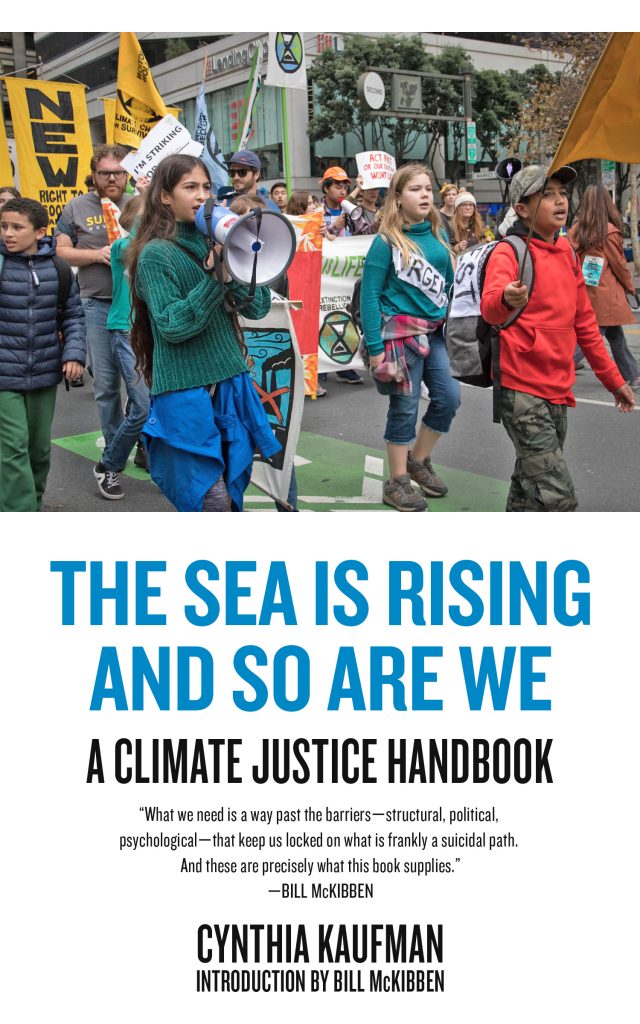
The Sea Is Rising and So Are We: A Climate Justice Handbook


The post The Future of Democracy Requires an End to Fossil-Fueled Fascism appeared first on PM Press.

Read the whole story
cjheinz
3 days ago
reply
True dis. What kind of crimes to these guys get charged with?
Lexington, KY; Naples, FL
Share this story
Delete

What Childhood Folklore Did You Learn As a Kid?

1 Comment

I loved this post by Kelsey Miller for Cup of Jo about “childlore”.

“Remember typing ‘BOOBS’ on a calculator?!” someone will blurt. “Or — or that thing when you’re driving by a cemetery and you have to hold your breath?” I love hearing the tiny differences in details (some people grew up lifting their feet off the floor when passing a graveyard). But what’s wild is how many of us grew up doing, drawing, singing, and believing the exact same funny little things: Miss Susie had a steamboat, Batman smelled, the floor was lava, and stepping on cracks broke our mothers’ backs.

For a definition of childlore, let’s go to the Wikipedia:

Childlore is a folklore or folk culture that focuses specifically on children typically between the ages of 6 and 15. As a branch of folklore, childlore is concerned with those activities which are learned and passed on by children to other children; it excludes the stories and tales told and spread by adults. Childlore can include games, riddles, rhymes, oral stories, codes, fantasies, jokes, and superstitions created by children.

Other than what’s already been mentioned, I can’t remember many specific childlore from my childhood (my recall for such things isn’t great). Perhaps some string games? I can still do cat’s cradle & Jacob’s ladder and taught them to my kids when they were younger. Oh and those cootie catchers.

The commenters at Cup of Jo offered several suggestions: the diarrhea song, padiddle (when you saw a car with only one headlight), and slug bug (or punch buggy). And OMG, I gasped when I read this comment — I used to make these little feet all the time!

Just recently on a field trip with my kids we all traveled in a school bus. We live in Wisconsin so it was chilly in the bus and the bus driver had the heater turned on high. The condensation in the bus was freezing on the inside of the windows as it so often does on a winter morning her and then it’s fun to draw things in the frost. My favorite is to press the side of my fist against the glass to make a little footprint and then use my fingers to make toes. It looks like a baby footprint on the window.

What childlore do you remember from your childhood?

Tags: Kelsey Miller · language

Read the whole story
cjheinz
4 days ago
reply
I really should contribute to this. I remember a lot of this type stuff from my childhood (de nino), particularly related to music.
Lexington, KY; Naples, FL
Share this story
Delete
Next Page of Stories