Log in




You are not who you think you are. You’re not even what you think you are.
Let's start with a story that should be at least somewhat familiar.
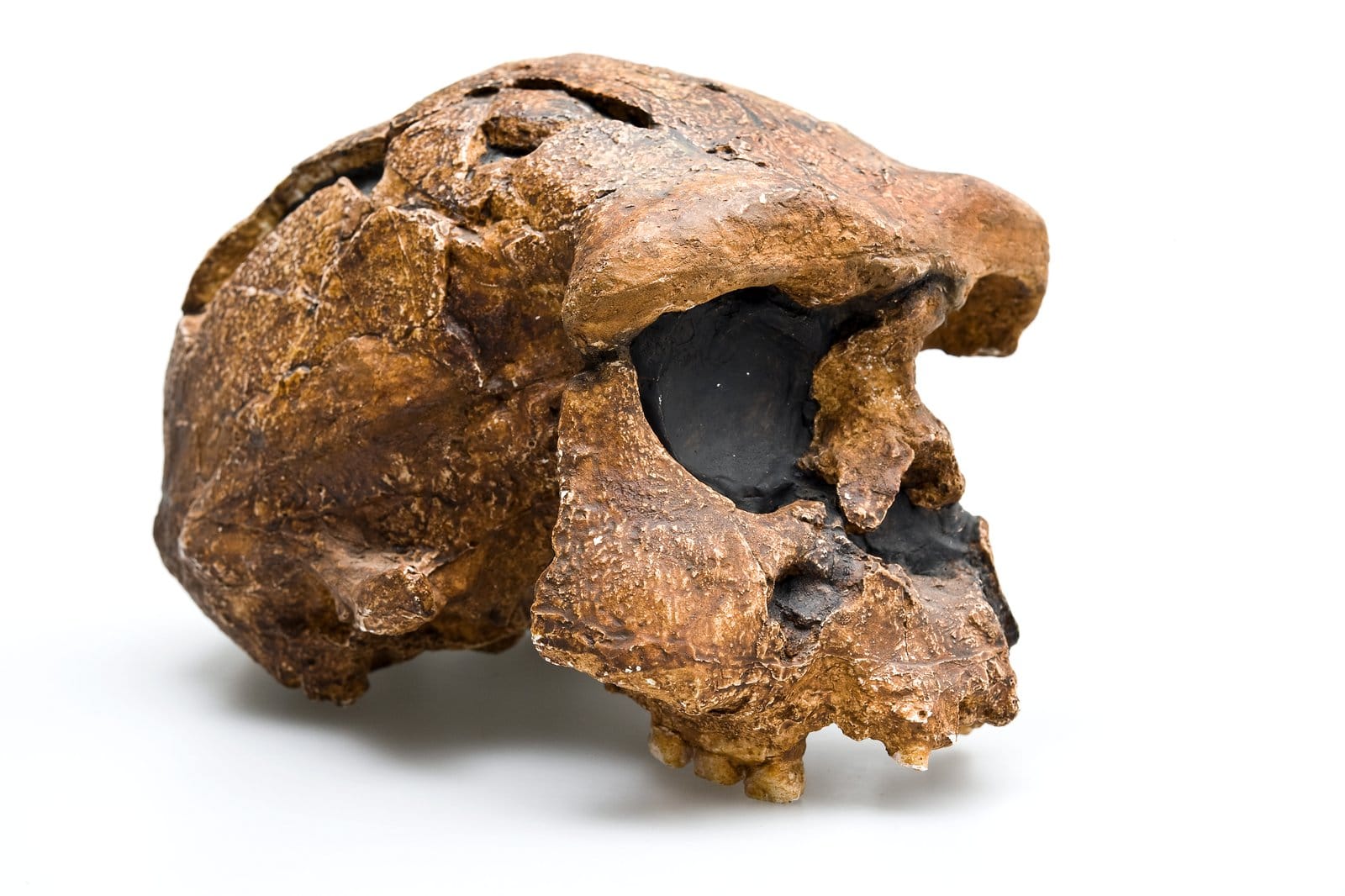
One upon a time, when we all lived in Africa and no one lived anywhere else, a people we now call Homo erectus struck into the world. Over the next million years, they spread through the Middle East, Europe, and Asia. They were tall. They were clever. They made sophisticated tools, found their way to isolated islands miles over the horizon, and created the oldest art that came from human hands.
Near the end of that million years, another species, Homo heidelbergensis, developed from an isolated group of H. erectus. We don't know quite where this happened, but in the following half a million years, this species followed their predecessors into Europe, Asia, and the Middle East.
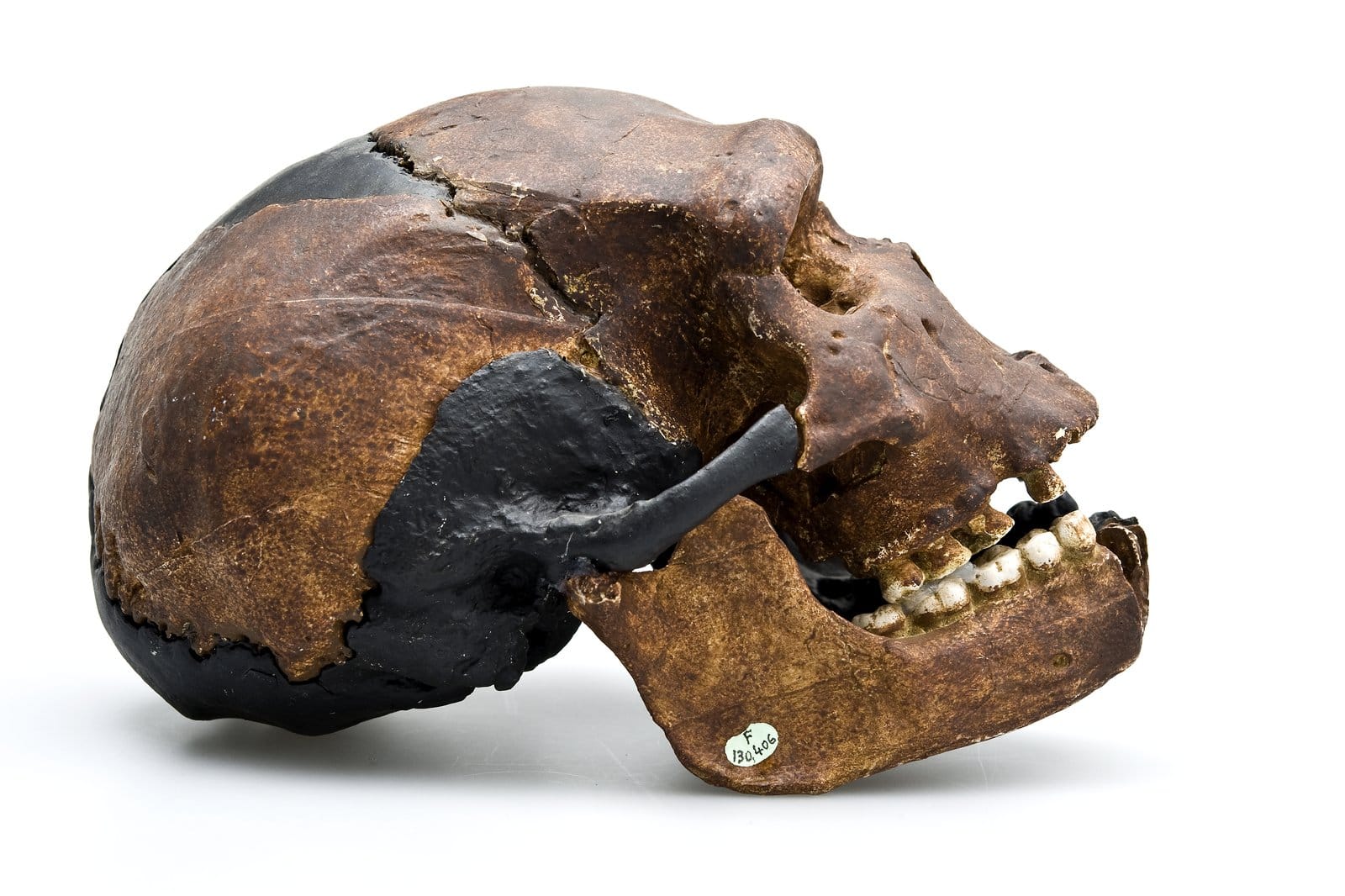
From H. heidelbergensis, other species developed. Around 400,000 years ago, there was Homo neanderthalensis and another species that is alternatively called Homo longi or Denisovans*. (Some analysis had suggested that there was another species in between: Homo antecessor, which is known largely from remains found in Western Europe, but this now looks more like just another offshoot in our bushy family tree.)
Finally, in Africa, another group of H. heidelbergensis produced individuals that appear to be the earliest known examples of Homo sapiens. The oldest we know of came from a place called Jebel Irhoud in Morocco. They are thought to date from around 315,000 years ago.
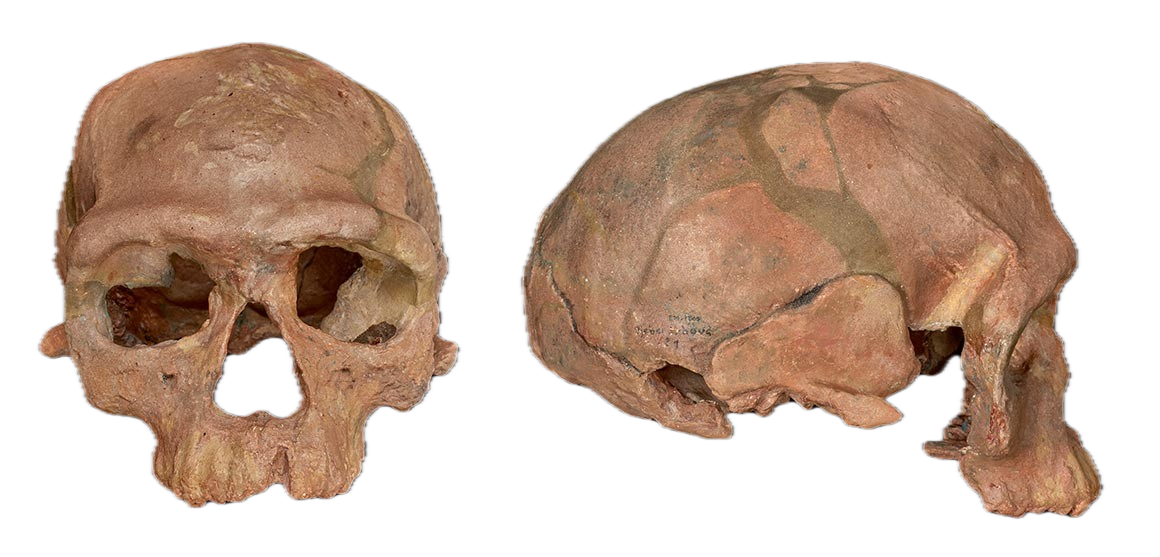
There were a few false starts, but finally, around 50,000 years ago, H. sapiens successfully followed their relatives out of Africa and into the Middle East, Europe, and Asia. And from there ...
But this is where the story gets strange. Because we–are not those people. You are not those people.
When those last-out-of-Africa hominin strangers, H. sapiens, finally stumbled onto the world stage, they were moving into a place that was practically rife with other humans. We're so used to a world when "human" means just one thing. Over the last three million years, that's seldom been the case.
Those first wandering H. sapiens had a lot of neighbors. Our old ancestor H. erectus had left behind several descendants, such as Homo luzonensis in the Philippines and the diminutive Homo floresiensis in Indonesia. There were probably others we still haven't found. There may even have been groups of plain old H. erectus itself still hanging around to greet the first H. sapiens that came to their neighborhoods.
In both the Middle East and Europe, there was groups of Neanderthals. In Asia, there were Denisovans. We know they met, not just because some sites have been found that share tools, bones, or burials from more than one species. We know, because they are still with us.
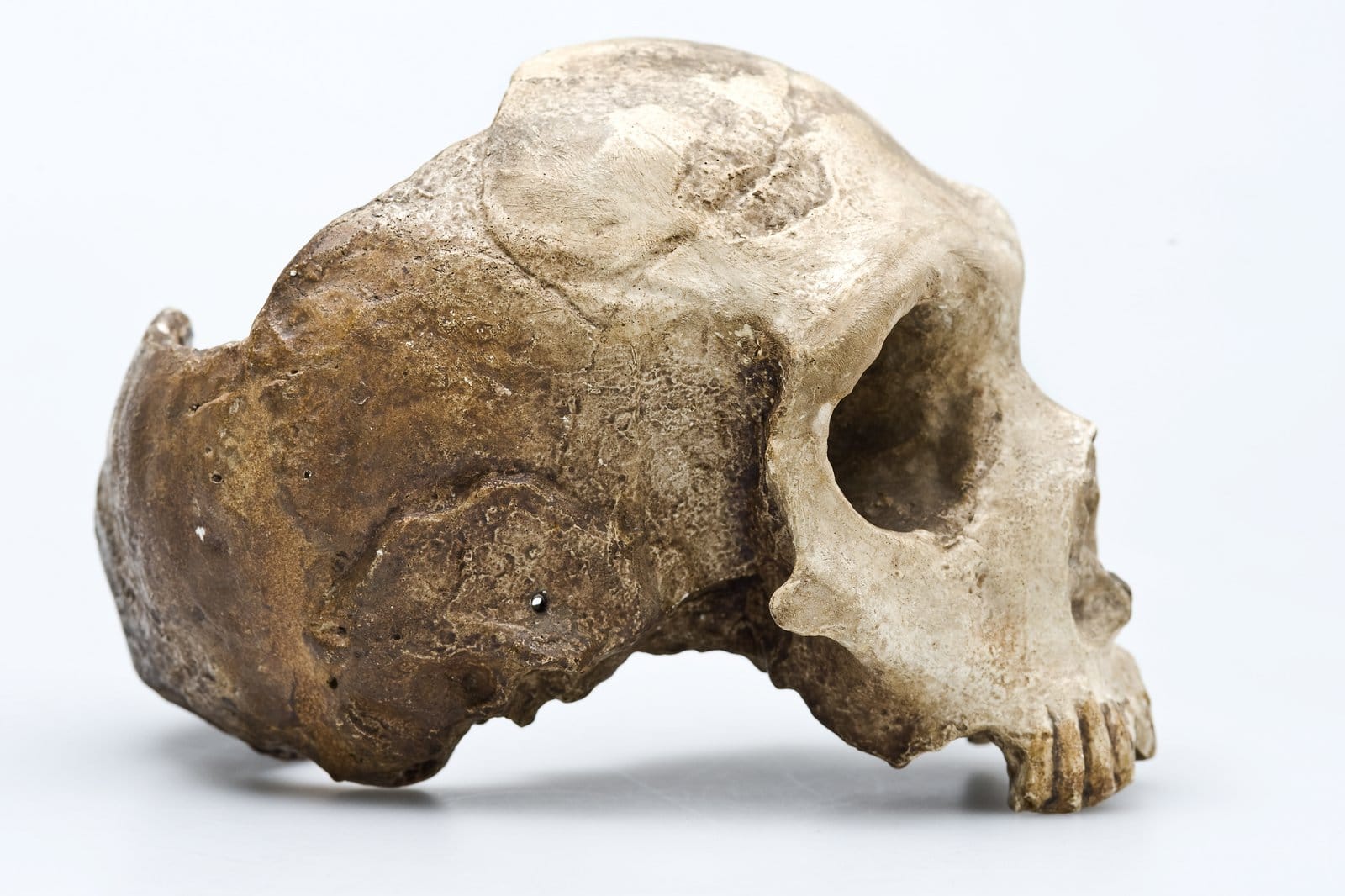
You're probably familiar with the fact that many modern people got between 1% and 4% of their genes from Neanderthals. This is so well known that most commercial DNA tests will happily report on your Neandertal-ity along with telling you whether your ancestors are from Denmark or Dalmatia. If it happens that your ancestors all came from Sub-Saharan Africa, your percentage of Neanderthal DNA is much lower. However, there is still a trace, likely resulting from sharing genes with some H. sapiens who had wandered into Neanderthal territory, only to return some generations later.
After two centuries of arguing about it, a pretty good case can be made that, far from murdering or displacing Neanderthals, H. sapiens simply absorbed them. From what we've been able to find, it appears that Neanderthals never existed in great numbers. The percentage of Neanderthal genes we see today may simply reflect the relative sizes of the populations when the two came together.
As multiple scientists and authors have pointed out, there is more Neanderthal DNA today than at any point in history. That's a strange kind of extinction.
From this, you might believe that modern people today take their genes largely from those H. sapiens who developed around Jebel Irhoud, with a dash of Neandertal thrown in. But this story isn't that simple.
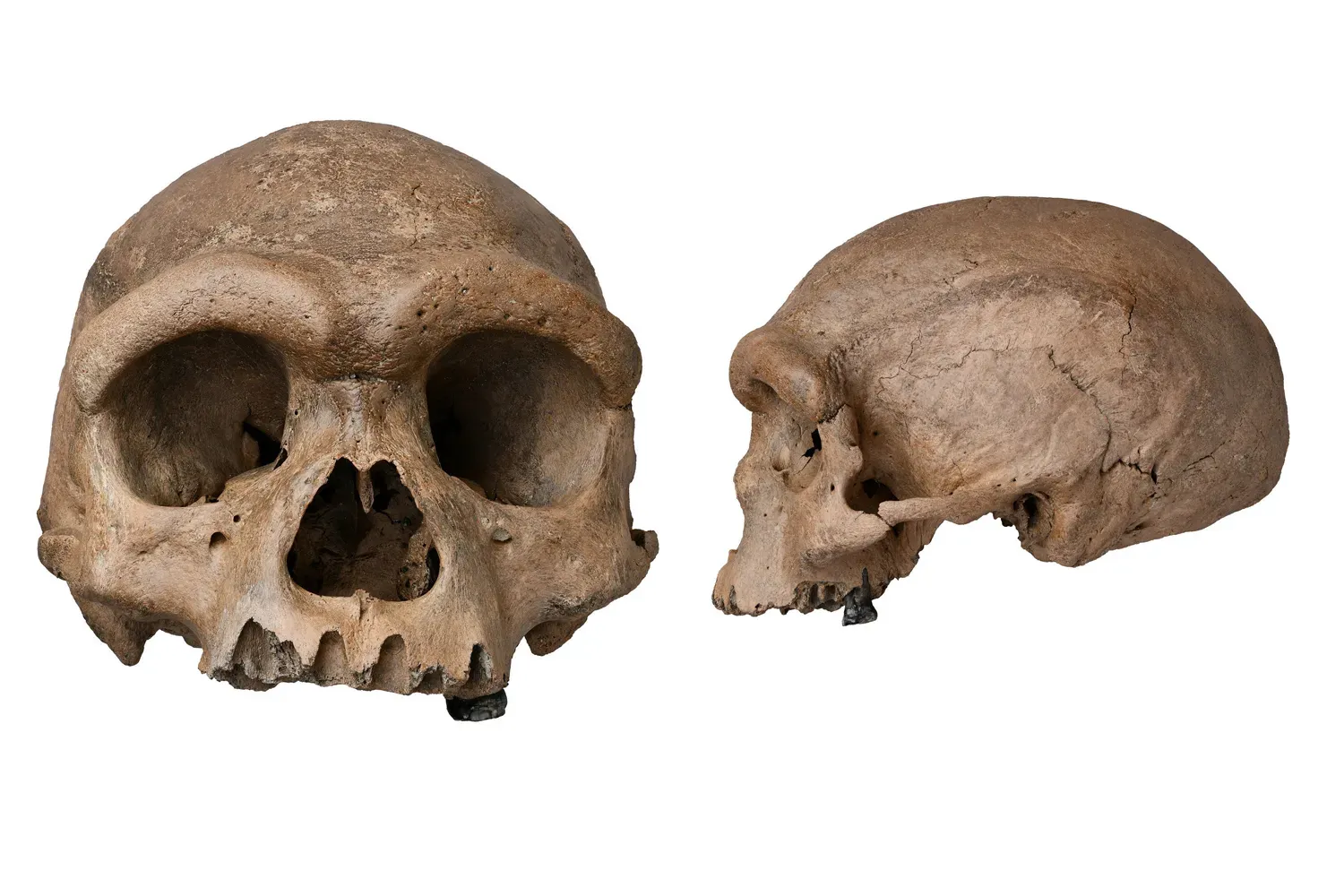
Those other descendants of H. heidelbergensis, the ones we call Denisovans (which are probably, probably a part of H. longi) also got into the big ... let's just say "group hug." Many people carry only a trace amount of Denisovan DNA, but if your ancestors came from some areas of Asia or South Pacific islands, you may be carrying as much as 4% of Denisovan DNA with you today.
We know these people from only a handful of fossils, but with numbers like that, they must have been pretty numerous — and friendly — when H. sapiens arrived at their camp fires.
So, humans on the planet today are a mixture of H. sapiens, H. neanderthalensis, and H. longi. In a world where people so often worry about races, we are, all of us, hybrids that span multiple species.
But wait! That's not the big news. All of this is just the build up to a research paper that came out last month in the journal Science.
A group of scientists, from the University of California Berkeley and Johns Hopkins University developed a system they named TRACE (TRacking Archaic Contributions via ARG Estimation ... because it's not science with an acronym) that "uses features of ancestral recombination graphs to identify archaic ancestry" in the DNA of modern humans.
Using examples of complete genomes from over 500 people from around the planet, they went fishing through the code to see which genes were shared, which had diverged over time, and which came from ancestors with "profound" differences from modern humans.
With this tool, they confirmed previous research identifying DNA sequences gleaned from Neanderthals and Denisovans (though their numbers for the percentage of each were a bit more conservative than previous studies). However, that was only the warm up for the big discovery.
In our DNA are at least two "ghost lineages;" fragments of human species who are our ancestors, but whom we have never met.
One of these ghosts lies far back, perhaps as far as two million years. This is the echo of a shared union that doesn't just precede H. sapiens, it may have occurred before H. erectus. (In fact, though the authors don't suggest this, the date opens the possibility that this cross played a large role in creating H. erectus from the base clay of its known ancestor, Homo habilis, and an unknown partner.)
The other ghost in our cells is much more recent. Sometime before H. sapiens left Africa, there appears to have been interbreeding with another species, perhaps an unknown descendant of H. heidelbergensis, because the genes we took from them have a resemblance to those of Neanderthals and Denisovans. It may have been a distinct population of H. heidelbergensis itself, since the youngest specimens of this species overlap with the oldest known H. sapiens by around 15,000 years. If that sounds like our ancestors mated with their own parents, no it's just ... Hey, what's a little genetic incest between species?
Most humans alive today appear to get from 0.2% to 1% of their genomes from this mystery union.
These aren't the only ghosts.
In individuals from Oceania, TRACE found an average of 0.73% Neanderthal, 0.66% Denisovan, and 0.33% ghost ancestry. Those numbers for the first two are lower than previous studies, but the TRACE data also shows something else interesting—hints of another unknown ancient hominin dating back to 1.8 million years ago. Because these traces were highest in the groups that had more Denisovan ancestors, the researchers suspect that it was the Denisovans who carried these "super-archaic" genes.
We find a significantly higher proportion of super-deep lineages in Denisovan than in Neanderthal segments. Simulations show that this pattern is inconsistent with a model lacking super-archaic introgression but is recapitulated by a model including super-archaic introgression into Denisovans. Furthermore, super-archaic fragments within introgressed Denisovan segments exhibit distinct genetic features that differentiate them from the background Denisovan ancestry, including much deeper coalescence times with modern humans, longer genomic lengths than mean ILS length from Neanderthal deep lineages, and low affinity to both Neanderthal and Denisovan reference genomes.
How Denisovans might have preserved these ancient genetic traces if they branched from H. heidelbergensis at about the same time as Neandertals isn't clear. All of us probably share in this ancient mixing, but because our percentage of Denisovan DNA is so low, for most of us it's barely a genetic whisper.
We've known for some time that the "march of progress" image from the 1960s—the one that shows a chimp-like ancestor on the left following by a series of brutish, slouching intermediaries leading to a modern (European) man on the right–is horribly wrong. In fact, paleontologists knew that idea was wrong before it was ever published. But it's only in the last two decades that we've learned just how wrong it is.
The story of modern humans and our hominin ancestors is complex. The tree of our ancestors is filled with limbs that went nowhere, and branches that confound expectations. And, unlike most actual trees, some of those branches seem to have merged as well as split.
We who survive are hybrid humans, carrying in every cell the story of ancient travels and forgotten people. Those H. sapiens at Jebel Irhoud are some of our ancestors, but they're far from the only ones. We each contain multitudes. None of us is "pure," and we should be glad of it.
There's one more twist to this story.
In a 2025 paper in Nature, a group of scientists from the University of Cambridge used their own tool (COBRAA) to sift the human genome for markers that indicated major events and population size changes.
What they found was that humans today are not descended from one group of ancestors, but two. These groups became separated from each other around 1.5 million years ago, possibly around the time some H. erectus migrated out of Africa and went off into the broader world. Soon after they split, one of these groups – "Population A" fell on hard times. It faced a population bottleneck that left it with only a few survivors, limiting their genetic diversity. Still, it was Population A that eventually produced H. heidelbergensis, Neandertals, and Denisovans.
Meanwhile, Population B flourished. They kept their genetic diversity and their population was more stable.
Whatever the reason for the separation, the genetic markers indicate that around 300,000 years ago, these two groups met up again. Whoever they were by then. Whatever they were. They came together with all the differences they had accumulated over a million years of being apart. After all their wandering and all they had seen.
We're not Population A or Population B. We're both.
Using cobraa, we present evidence for an extended period of structure in the history of all modern humans, in which two ancestral populations that diverged ~1.5 million years ago came together in an admixture event ~300 thousand years ago, in a ratio of ~80:20%.
Those people who appeared in Morocco came directly from this merger of two long-separated groups. When they left Africa again, they gathered into themselves all the scattered forms of human that they met. We're all of them now. We're all of them. We're all the eggs, and the basket.
You are 80% the people of Population A, who went through a terrible time, but survived. You are 20% the people of Population B, who flourished in their time, before welcoming their long-long-long-lost relations.
You're part Neanderthal, part Denisovan, and part ghost. You're 100% human. So are we all.