Retired since 2012.
2439 stories
·
4 followers

Tamarixia radiata, a pinhead-sized parasitoid wasp, hunts the psyllid that spreads citrus greening (HLB) in Florida

1 Share

…and Florida residents can get the wasps free.

Tamarixia radiata is a roughly 1-millimeter parasitoid wasp that kills the Asian citrus psyllid (Diaphorina citri), the insect that spreads the bacterium behind citrus greening (HLB). It won’t cure an infected tree, but by suppressing the psyllid it slows the disease. As you will find here, Florida residents can request the wasps for free!

A Very Small Ally with a Very Big Job

Meet one of the smallest and hardest-working allies in Florida’s and California citrus story. Tamarixia radiata is a gnat-sized parasitoid wasp, no bigger than the head of a pin, , and it has a single mission: hunting down the Asian citrus psyllid, the insect that spreads devastating citrus greening disease. In this blog, we’ll walk through where this wasp came from, why it matters to your dooryard citrus, what the research says, and how you can get your own vial.


Adult Tamarixia radiata wasp, about 1 mm long, magnified under a lab microscope

Figure 1. An adult Tamarixia radiata magnified under a lab microscope. At roughly 1 mm long, this wasp is easy to miss but hard at work. Credit: Edwin Gutierrez-Rodriguez, UF/IFAS.

 A Little History: How a Wasp Became Florida’s Ally

The trouble began in 1998, when the Asian citrus psyllid (Diaphorina citri) was first discovered in Palm Beach County, Florida (The Discovery of Huanglongbing in Florida), feeding on orange jasmine. The psyllid itself is a problem, but the real danger is what it carries: the bacterium that causes Huanglongbing (HLB), better known as citrus greening, one of the most destructive citrus diseases in the world.

Scientists needed a natural enemy. In October 1998, researchers imported Tamarixia radiata from Taiwan and Vietnam into a high-security quarantine at the Florida Department of Agriculture and Consumer Services (FDACS) Division of plant Industry in Gainesville.

To keep the disease out, no plant material or psyllid hosts came with them, and the wasps were reared on psyllids raised on orange jasmine. Over more than a dozen generations, every colony was tested to be sure it was clean.

Permission to release came in 1999. The first Tamarixia were set free near Fort Pierce. It was the start of Florida’s classical biological control program against the psyllid, and the wasp has since spread and worked across the state…read more.


Did you know?

The wasp had already proven itself overseas. According to the EPPO Global Database, T. radiata may be present on all continents except Antarctica. Over the two time periods (2030 and 2050), T. radiata is projected to expand its known distribution into new climatic regions, mainly due to increases in the mean temperature of the coldest quarter in those regions. EPPO Global Database


The word parasitoid is different from parasite, which you are probably more familiar with.

A parasite generally feeds on a host without killing it. A parasitoid, like Tamarixia, ultimately kills its host as part of completing its life cycle. And this one is remarkably specific: it does not attack any insect other than the Asian citrus psyllid, making it a very safe, targeted tool for your yard.

A two-front attack

This little wasp fights the psyllid in two ways at once:

  • Parasitism: A female lays an egg beneath a psyllid nymph. The larva hatches and feeds on that nymph from the outside (an “ectoparasitoid”), killing it before emerging as a new adult wasp.
  • Host feeding: The female also punctures psyllid nymphs with her ovipositor and feeds on the fluids that ooze out. This protein lets her lay more eggs and kills the psyllid directly.

Add it up, and a single female Tamarixia can kill up to 500 psyllids in her lifetime through the combination of host feeding and parasitism. Not bad for an insect you can barely see.

Why It Matters for our Citrus

Citrus greening has no cure yet! Infected trees show blotchy, mottled yellow leaves, heavy leaf drop, dieback, and small, misshapen, bitter fruit. Because the bacterium is spread by the psyllid, controlling the psyllid is one of the best ways a homeowner can slow the disease, for their own trees and their neighbors’ trees, too.

Commercial groves manage psyllids as part of a larger integrated program. But backyard and dooryard citrus often go untreated, and those trees can quietly build up large psyllid populations that spread greening through the neighborhood. That is exactly the gap biological control is designed to fill: it is environmentally sound, needs no spraying, and keeps working on its own.

What the Research Says

Florida has studied this wasp closely, and the honest picture is one of a helpful, but not magic, tool.

UF/IFAS and FDACS research (Qureshi et al. 2009) found parasitism rates in Florida averaging under 20% in spring and summer, rising to roughly 39–56% in the fall. Some earlier Florida surveys recorded much lower rates, showing how variable results can be across sites and seasons (Especially summer).

Elsewhere, results have been even stronger: parasitism rates of 79–88% have been reported in Puerto Rico, and Brazilian mass-rearing studies have recorded rates of 72–89%. Lab work also points to the wasp’s “sweet spot”: Tamarixia develops and survives best at about 26–30 °C, and does better on older psyllid nymphs.

The takeaway from UF/IFAS science is consistent: Tamarixia radiata can meaningfully suppress psyllid populations and is considered the most effective natural enemy of the Asian citrus psyllid, especially as one part of an integrated approach. It works best when released widely and repeatedly, which is where you come in.

The numbers at a glance

  • Up to 500 psyllids potentially killed by one female wasp (host feeding + parasitism)

  • 39–56% parasitism in Florida in fall; higher in some regions

  • 26–30 °C is the ideal temperature range for the wasp

  • Attacks only the Asian citrus psyllid, no other insects

How to Get Your Own Tamarixia

Since 1999, these wasps have been released in research and commercial groves, and today they are available to Florida home gardeners at no charge. FDACS Division of Plant Industry provides vials of live Tamarixia radiata for release on your property, and UF/IFAS Extension county offices often host distribution and “access” events.

Two easy ways to request wasps


Releasing them in three steps (from FDACS instructions)

Your vials contain live wasps and a small strip of paper towel lightly coated with honey to keep them fed. Release them as soon as possible for best results; the sooner they’re in your tree, the better they survive. Then follow these steps:

  1. Find the psyllids first. If possible, locate an infestation of Asian citrus psyllids on your citrus, or on orange/orange jasmine plantings. If you can’t identify an infestation, that’s OK, release within the citrus canopy anyway; the wasps will actively seek out psyllid nymphs on their own.
  2. Uncap the vial in the canopy. Hold the vial near the canopy with the opening facing upward and place it securely in the tree so the wasps can leave on their own.
  3. Return to release the rest. Come-back a little later to remove the vial, gently tapping out any remaining wasps into the tree.

See here how it looks like! 


Quick Check: Test Your Tamarixia Know-How

Question 1: You can’t find any psyllids on your tree. You should:

A) Skip the release and save the wasps
B) Release in the canopy anyway, the wasps will hunt
C) Spray insecticide first

Question 2: You received two vials. You should:

A) Empty both into one tree
B) Spread them among different trees or areas
C) Save one on the shelf for next month
(Answers: B, B)

Be Part of the Solution

Releasing Tamarixia on your property helps your citrus and your neighbors’ citrus, and it adds one more foothold for this beneficial wasp across Florida. It’s free, it’s easy, and it puts real UF/IFAS and FDACS science to work right in your own backyard. Reach out to your county Extension office to get started.

Let biology work ! Tamarixia is a marathon ally, not a one-shot fix.

Remember: You can’t spray your way out of greening — but a pinhead-sized wasp, released again and again, quietly tips the odds back in your favor.

Questions?

Does Tamarixia  cure citrus greening? No. It works by kills the Asian citrus psyllid; it does not cure the bacterial infection in an already-sick tree.
How big is Tamarixia radiata? About 1-millimeter length. Imagine the size of a pinhead… or see my Facebook video
Is it safe to release in my yard? Absolutely. It goes only to the Asian citrus psyllid and no other insects.
How many psyllids can one wasp kill? Depending on above discussed, about 500 in her lifetime, through parasitism and host feeding.
How do I get Tamarixia in Florida? Free from the FDACS Division of plant Industry… see below

Something else…Contact Your Local Extension Office

Every grove is unique. Reach out to your UF/IFAS Extension Agent or the biological control team that supplies the wasps at FDACS:


Amy Croft, Biological Scientist I/ Gloria Lotz, Biological Scientist III

FDACS Division of Plant Industry, 1911 SW 34th Street, Gainesville, FL 32608

Email: Amy.Croft@fdacs.gov     Phone: (352) 395-4738

Learn More & Sources


An Equal Opportunity Institution. UF/IFAS Extension, University of Florida, Institute of Food and Agricultural Sciences. This document is available in alternative formats upon request; contact your local UF/IFAS Extension office for accommodations.

Read the whole story
cjheinz
1 hour ago
reply
Lexington, KY; Naples, FL
Share this story
Delete

Something for the digital crate-diggers: The 40 Best...

1 Comment

Something for the digital crate-diggers: The 40 Best Albums From the Last 40 Years That You Probably Didn’t Hear (But Should’ve). I’d only heard of one or two these…

Read the whole story
cjheinz
5 days ago
reply
Nice!
Lexington, KY; Naples, FL
Share this story
Delete

The Elephant’s Song – a new short story for Patreon supporters

1 Comment
To view this content, you must be a member of Tobias's Patreon at $1 or more
- Click "Read more" to unlock this content at the source
Read the whole story
cjheinz
6 days ago
reply
Great story!
Lexington, KY; Naples, FL
Share this story
Delete

I found this AI Compass quiz genuinely useful for...

1 Comment

I found this AI Compass quiz genuinely useful for pinpointing how I actually feel about various aspects of AI. At the same time, I don’t think my result (“The Kontextmaschine”) quite fits…

Read the whole story
cjheinz
7 days ago
reply
I got "The Skeptic".
Lexington, KY; Naples, FL
Share this story
Delete

UN asks AI companies to reveal full environmental impacts

1 Share

The head of the United Nations has launched an initiative aimed at holding artificial intelligence companies accountable for their exploding environmental impacts, including their carbon emissions, the amount of water and land used for data centres, and the energy they consume.

During a speech at London Climate Action Week on Tuesday, António Guterres noted that AI can accelerate climate solutions, among other key challenges, and said its potential must be harnessed.

“But AI is also hungry for land, water and power,” he emphasised, adding that the data centres needed to run AI models already consume more electricity than most countries. 

The UN Secretary-General repeated a call he first made in July 2025 for all big AI companies to commit to power every data centre with renewable energy by 2030. 

Some tech firms have announced they are sourcing or building out clean energy to run their hubs, but growing power demand is also contributing to gas-fired generation in the US, according to data from Global Energy Monitor.

The International Energy Agency (IEA) estimates that data centres are set to more than double the emissions from the electricity they use between 2024 and 2030 in a high-growth scenario. But AI’s use could lead to far larger reductions in the energy sector through efficiency gains if adopted widely.

    ‘No more hidden costs’

    Proposing the new “AI Environmental Transparency Initiative” on Tuesday, Guterres also urged big AI firms companies to measure and publicly disclose the full environmental impact of their systems, including their carbon, water, and land footprints.

    “No more hidden costs. No more shifting the burden onto those least able to bear it. It is time to come clean,” he said in a major speech on responding to the world’s twin climate and energy crises. “If AI is to help build a better future, it must be honest about what it costs us now.”

    A report issued earlier this month by the UN University Institute for Water, Environment and Health noted that most current assessments of AI’s environmental cost focus on carbon emissions from training models. But, it added, this misses a substantial part of the picture. 

    Every kilowatt-hour of electricity for AI also carries a water footprint, from cooling and generation, and a land footprint, from infrastructure and supply chains, it said. 

    Explainer: Will AI data centres make or break the energy transition?

    The report estimated that AI data centres globally could consume 945 terawatt-hours of electricity annually by 2030 –  more power than all but five countries and roughly twice France’s 2025 consumption.

    Offsetting this carbon footprint by 2030 would require growing some 6.7 billion trees over 10 years, it calculated. Producing power for the data centres would consume water equal to the basic needs of 1.3 billion people in sub-Saharan Africa for a year and take up land of more than 14,500 square kilometers, roughly twice the Jakarta metropolitan area.

    The European Union said earlier this month it will develop minimum energy-efficiency standards for both new and existing data centres, with a “needs assessment” ​due by 2027, Reuters reported. It’s also planning ⁠a sustainability label for data centres, covering criteria including water use and clean energy supply – but that has been delayed.    

    US community push-back 

    Asked after his speech what the response had been, the UN chief said “we’ll see”, without giving more details.

    But, he argued that, in his view, the push for transparency “is perfectly reasonable and even positive for the AI industry, because eventually some people will say that they consume much more than they really do”. “I think the truth is essential,” he added. 

    Concerns about the environmental impacts of AI and the infrastructure needed to run the technology have led to growing opposition in some communities, especially in the US.

    This month, Monterey Park in Los Angeles County was the first city in the United States to enact a citywide prohibition on data centres through a voter-approved ballot measure. The developers behind a proposed centre in the area had already pulled the project in April amid an increasingly hostile local environment and regulatory uncertainty.

    The vote that stopped a data center: US communities query resource-hungry AI

    According to nonprofit Data Center Watch, around $64 billion-worth of data centre projects nationwide were delayed or blocked between May 2024 and March 2025 as communities pushed back against them. 

    Industry lobby groups argue that data centres can provide economic benefits in their host communities. According to the US-based Data Center Coalition, which represents big operators and developers, data centres generate tax revenue, support construction and technical jobs, and provide infrastructure needed for cloud computing, scientific research and AI development.

    The industry has also challenged claims that data centers necessarily raise electricity costs for households.

    Force for good?

    The UN chief said benefits can be few in the places that are home to the data centre, while “communities are often left in the dark about the environmental impact of the infrastructure rising around them”.

    Guterres said companies have an “obligation” to be clear and open about the services they are offering but also the level of resources they require. 

    “Transparency is essential for the decisions that communities must make – and transparency is essential even for the future of artificial intelligence, and to make sure that artificial intelligence is essentially a force for good,” he told an audience of climate professionals in London

    A senior UN official told journalists ahead of Tuesday’s announcement that the AI industry has started to talk about and disclose some of their impacts, but those efforts are not yet comprehensive enough. 

    The hope is that the new initiative will “encourage the industry to come together and take further action on it”, the official said.

    The post UN asks AI companies to reveal full environmental impacts appeared first on Climate Home News.

    Read the whole story
    cjheinz
    10 days ago
    reply
    Lexington, KY; Naples, FL
    Share this story
    Delete

    Vast ‘Structures’ In Space Reveal the Universe Isn't What We Thought

    1 Comment

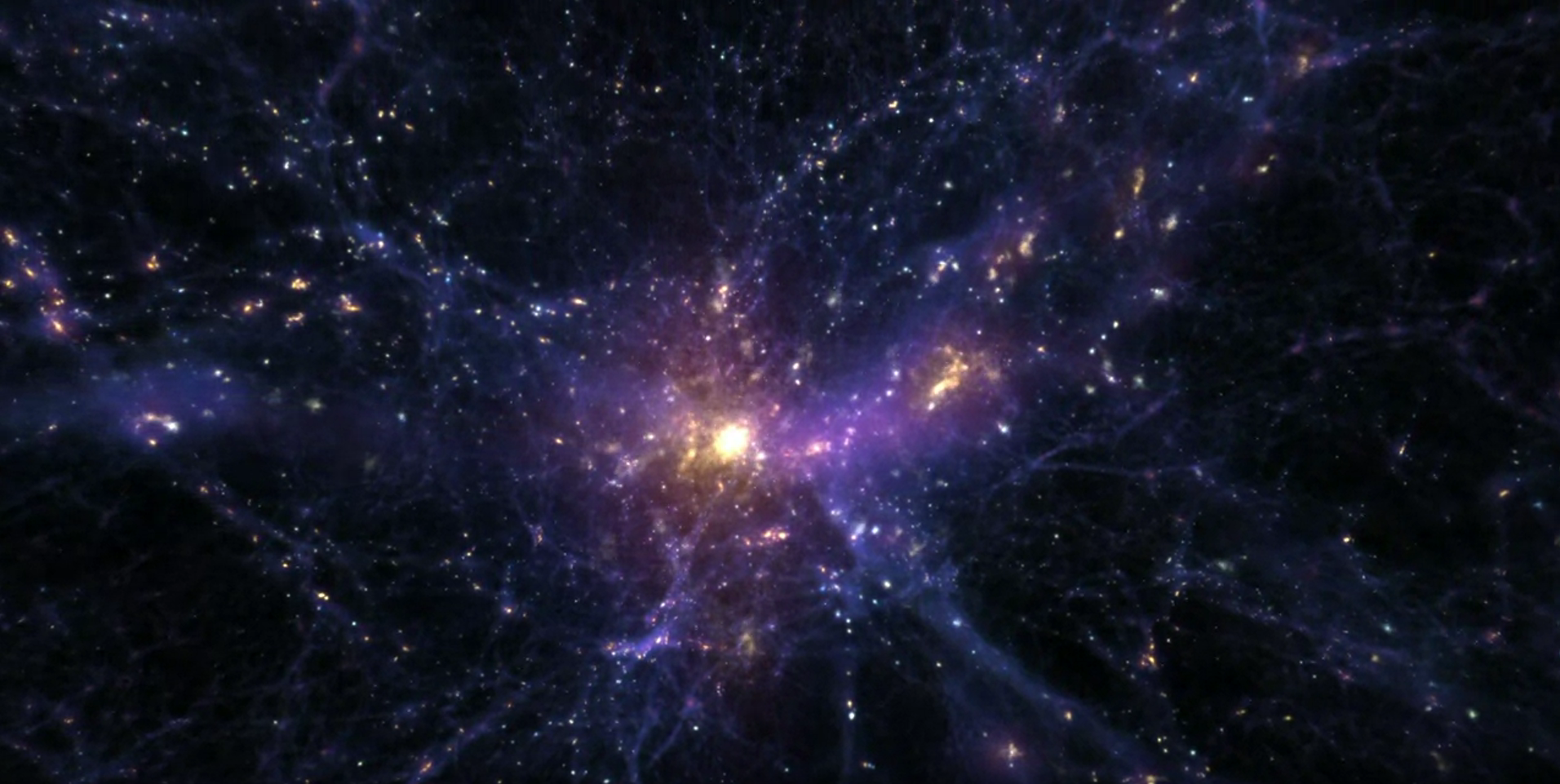
    Scientists have discovered new evidence that the cosmic structures connecting the universe are much larger than previously predicted—persisting over billions of light years—a finding that challenges a core tenet of cosmology and hints at the possibility of new physics, according to a study published on Wednesday in Nature.

    The standard model of cosmology, a well-corroborated framework for understanding the universe that is also known as the Lambda cold dark matter (ΛCDM) model, predicts that the large-scale structure of space looks the same in all areas (homogeneity) and in all directions (isotropy). While there is variation in the distribution of matter on small scales, such as thousands or millions of light years, these distinctions should smooth out into a uniform pattern on the scale of the cosmic web, which is a network of large-scale structures made of dark matter, gas, and galaxies that stretches across the universe.

    But in recent years, new observational data has started to hint that galaxies cluster in “preferred directions,” forming distinct structures known as “anisotropies” that are not uniform, even across vast distances. Now, a pair of physicists has discovered that these distinct directions and patterns persist even to the scale of a gigaparsec, which is a unit equal to 3.26 billion light years, possibly signalling “the need for a shift in modern cosmology,” according to their new study.

    “The structures observed in the real Universe are significantly larger and more persistent than those formed in state-of-the-art simulations based on the standard model of cosmology,” said authors Francesco Sylos Labini of the Enrico Fermi Research Center in Rome, Italy, and Marco Galoppo of the University of Canterbury in Christchurch, New Zealand, in an email exchange with 404 Media.

    “The key advance of our analysis is that it allows this difference to be quantified,” they added. “By measuring the spatial extent and coherence of the observed structures and comparing them directly with theoretical predictions, we found that the discrepancy is statistically highly significant. In other words, the largest structures in the real Universe appear to be substantially larger than expected in standard models of galaxy formation.”

    According to existing models, the cosmic web emerged from small density fluctuations in the early universe and gradually developed into large-scale filaments and nodes made of dark matter that gravitationally attract gas, galaxies, and other forms of matter. 

    Last year, the Dark Energy Spectroscopic Instrument (DESI), a major astronomical survey based in Arizona, released the largest high-resolution 3D map of the universe, which has revolutionized cosmology and allowed scientists to test those theories against observational data.

    Labini and Galoppo analyzed the DESI release with statistical tools, including the Angular Distribution of Pairwise Distances (ADPD), which is especially effective for detecting and characterizing large-scale anisotropies in DESI’s dataset.

    “The idea was to try to really test whether the idea that isotropies reached very large scales is now supported by data,” said Galoppo in a follow-up call. “Even just five or ten years ago, we didn't really have the data to test on gigaparsec scales. But now, we had a chance, so we decided to take it.”

    “What we are able to do is to characterize how large are the largest structures inside this sample” of DESI observations, added Labini in the call.

    The results revealed that even in DESI’s super-zoomed-out observations, large-scale structures create preferred directions of galaxy distribution, as opposed to an overall isotropic pattern. This contrasts with expectations derived from the cosmic microwave background, the oldest light in the universe, which suggests that directional correlations should fade rapidly at large scales.  

    “In the standard model, it's not that there aren’t structures,” said Galoppo in the call. “It is just that they are supposed to be smaller and less persistent than what we found. That's the crux of the matter.”

    To that end, DESI is expected to release a new batch of observations within a year, and similar datasets will also be forthcoming from Europe’s Euclid space telescope and the Vera C. Rubin Observatory in Chile in the near term. These new and improved views of the universe will help scientists grapple with just how vast these large-scale structures are, and what that means for our understanding of our cosmic surroundings. 

    “At present, there is no simple or widely accepted modification of the ΛCDM framework that naturally explains structures of this size while remaining consistent with the observed uniformity of the cosmic microwave background,” Labini and Galoppo wrote over email. “That is precisely why these observations are so interesting: they point to a potentially important gap between theory and observation that deserves further investigation.”

    “If future surveys continue to find coherent directional structures on even larger scales, the implications for cosmology would be profound,” they concluded.


    Read the whole story
    cjheinz
    13 days ago
    reply
    The big bang is the big cell. It divides again & again.
    Lexington, KY; Naples, FL
    Share this story
    Delete
    Next Page of Stories